
Chinese youths find freedom at Thailand’s Shambhala festival
Doi Chiang Dao is one of Thailand’s most stunning mountains, a 2,175-metre limestone peak that rises like a behemoth from flat farmland. Every February, it becomes the backdrop to a 10-day festival called Shambhala in Your Heart. Organised by a group of silver-haired, 1960s purist Japanese hippies, the event is set in an Edenic campsite in northern Thailand, where shade trees flank a cool running stream and open-air hot springs are just a 10-minute walk away.
In recent years, Shambhala has become a major gathering for an eccentric panoply of hippie travellers from Thailand and around the region, drawing fire spinners, drummers and musicians for evening performances, while afternoons are filled with practice sessions for an esoteric variety of flow artists who juggle and dance with dragon staffs, poi sticks, rope darts and streaming ribbons.
Though Shambhala was first held in 2010, it was not until 2024 that mainland Chinese youths, free to travel after years of Covid lockdowns, discovered it. Chinese attendance has since snowballed, going from 700 attendees in 2024 to around 4,000 at this February’s festival, accounting for around 40 per cent of all the festivalgoers and comprising the largest single national group, outnumbering even local Thais, according to organisers. One factor in this spike is that Shambhala coincides with the Lunar New Year holiday, a time when many Chinese travel.
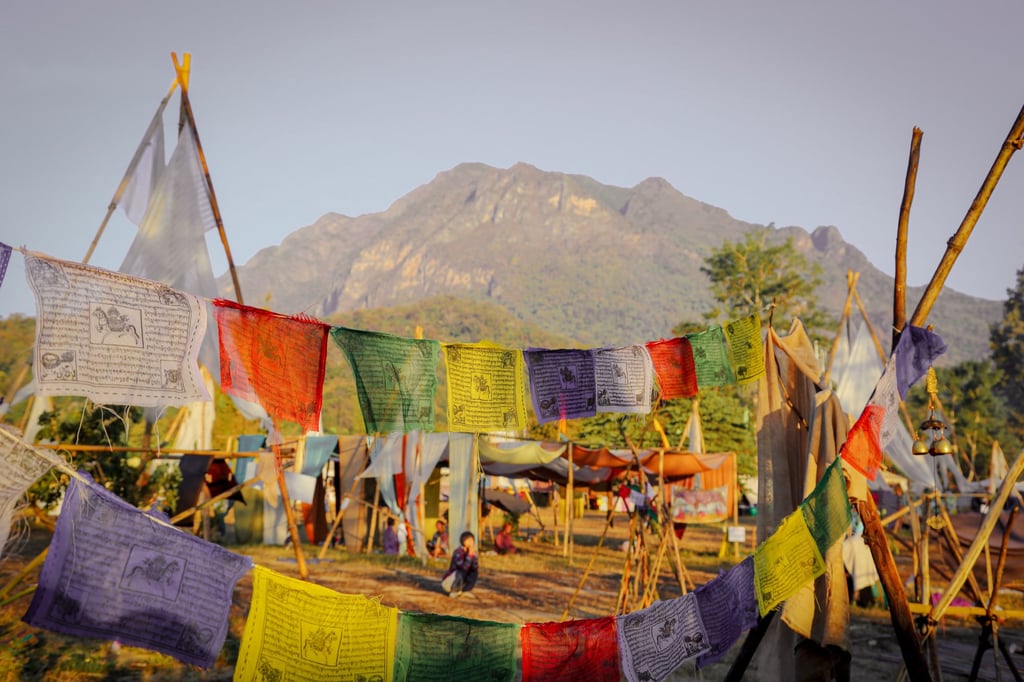
The festival, held this year from February 6 to 15, is named after a mythical paradise of Tibetan Buddhism and, according to its mission statement, aspires to keep things “analogue, handmade, organic and slow”.
Advertisement
In many ways, it is a throwback to pre-internet times. There are no online ticket sales, no corporate sponsors, no glamping and no DJs. The main stage line-up lasts from only 6pm to 11pm, while daytime activities include drum circles, yoga and pottery. Tickets are cheap, only 300 baht (US$9.20) for a day pass, and they can only be bought in cash at the door. With limited phone network coverage on-site, attendees trade contacts by typing their IDs into the search bars of social media apps and taking screenshots. A handwritten sign at one vendor booth reads, “We do not have Wi-fi. Pretend it’s 1995. Talk to each other!”
Organisers claim the festival and its spirit derive from a seminal Japanese gathering in 1988, the Inochi no Matsuri, or Festival of Life, which was arranged by a group of activists and folk musicians in reaction to the Chernobyl nuclear disaster. As one of Japan’s first modern camping and music festivals, it has been dubbed “the Japanese Woodstock” and has since that time been held intermittently, with its most recent edition in 2024.
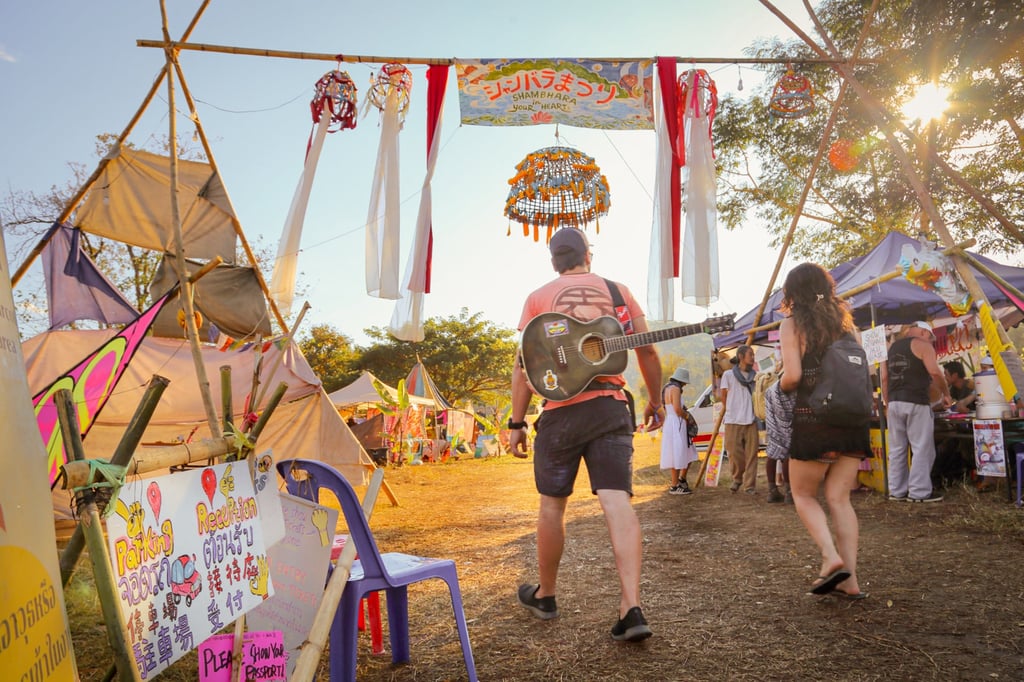
For most of its first decade, Shambhala attracted only around 300 to 400 diehards, many of them travelling from Japan. But attendance has exploded since Covid. This year, the festival hosted visitors from 83 countries, averaging 1,000 attendees per day. This growth has been mostly organic and social media-driven, and Chinese attendance has been a huge part of that.
Advertisement
