

From China to Taiwan in 30 minutes: Idyllic islands beckon as the Great Firewall recedes
XIAMEN/KINMEN – Fancy a short getaway to Taiwan while on holiday in south-eastern China? A breezy ferry ride that is more accessible to foreigners than to most Chinese citizens might be an option.
From the Chinese coastal city of Xiamen, travellers can board a ferry to Kinmen, an archipelago that is just 3km across the sea but controlled by Taipei, more than 300km away.
A regular ticket for a one-way trip that takes 30 minutes will set you back around 160 yuan (S$30).
The ferry service, known as the “Mini Three Links”, is one of four routes that form the speediest connections between China and Taiwan. Other services link Fujian’s Quanzhou city with Kinmen, as well as two locations in Fujian’s Fuzhou city to two different areas of Taiwan’s Matsu islands.
These links, aimed at growing cross-strait ties, have boosted tourism to and from the outlying Taiwanese islands – offering curious vacationers a view of life on the other side.
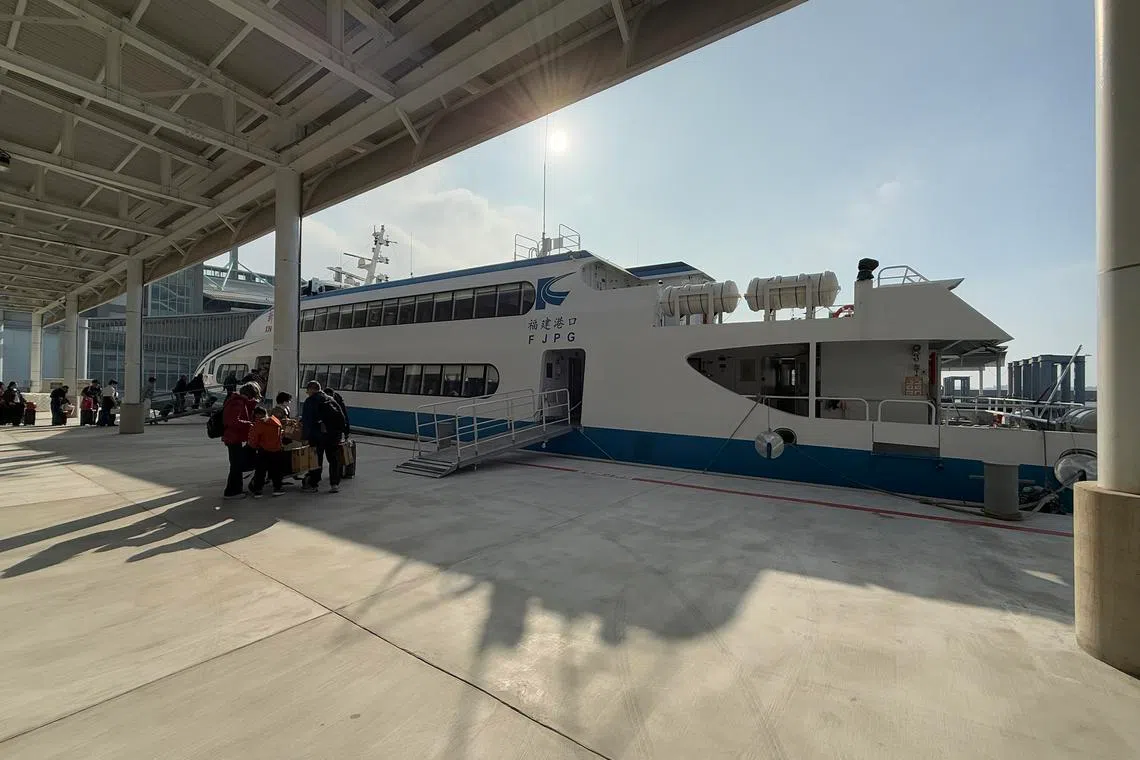
People boarding a ferry in Kinmen, bound for Xiamen, in February.
ST PHOTO: JOYCE ZK LIM
For travellers coming from China, the ferries are also a gateway to places where blocked websites such as Google and YouTube can be accessed, and where movies that are either banned or released later than in Taiwan can be viewed.
Not everyone, though, can ride the ferry.
Taiwanese and foreigners allowed to enter Taiwan can embark in Xiamen. But there are restrictions on Chinese passport holders, with only residents of Fujian province (and soon Shanghai municipality) – along with others who fulfil specific criteria – permitted to avail themselves of the service.
On a weekday afternoon in February, The Straits Times took a ride to Kinmen from Xiamen’s Wutong Ferry Terminal. Tickets can be purchased online ahead of time via a WeChat mini-programme and collected in person at the terminal on the day of departure.
The ride offers a window into how people from both sides are traversing the strait, for leisure and for work. Many of the passengers ST encountered were tourists or Taiwanese people with business on the mainland.
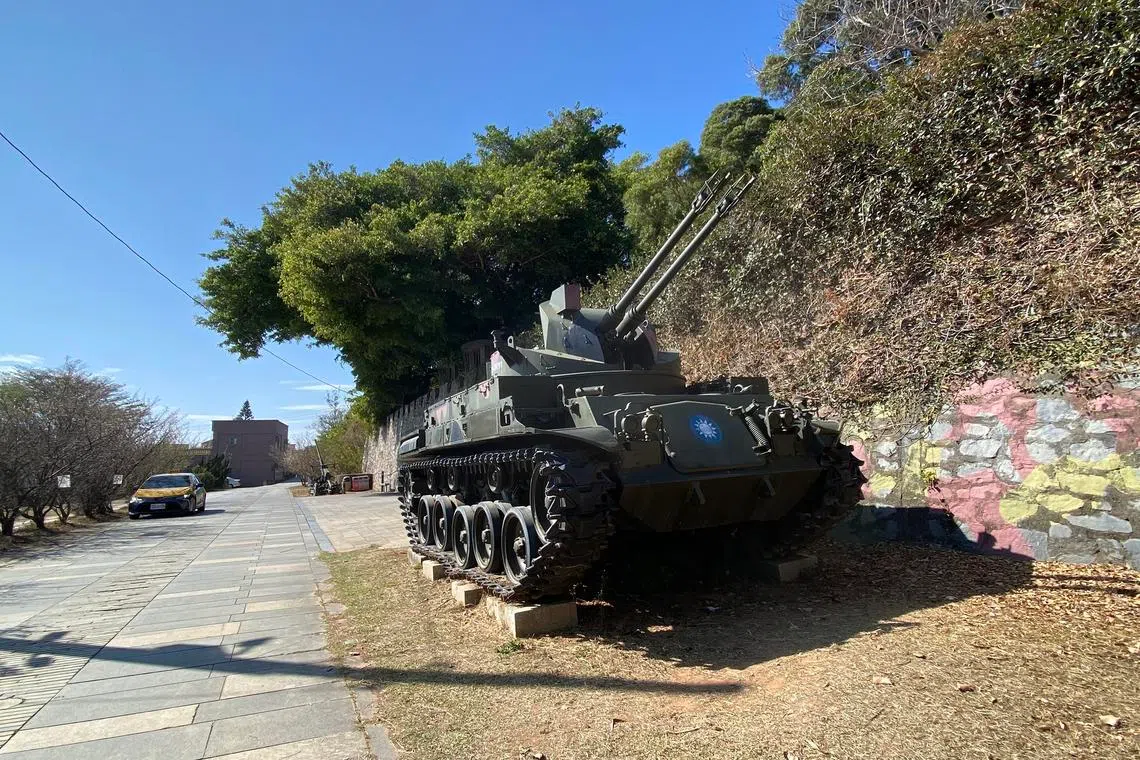
A tank outside Tiehan Fort for tourists.
ST PHOTO: YIP WAI YEE
In the queue to clear customs was Taiwanese businessman Hsu Wen-kun, a frequent commuter who runs a frozen seafood business in Fujian. He was going home to Tainan after a short business trip, and had with him a suitcase full of snacks, like melon seeds, for his family.
Also on the ferry was Mr Liu Kee-jun, a retiree from Taiwan’s Miaoli county who was returning with his tour group from an 11-day trip to China. The group, formed of people from all over Taiwan, was transiting in Kinmen, from which everyone would fly back to their respective homes, he said.
Looking out the ferry windows, passengers can see construction under way on a bridge that will link Xiamen’s main island with the city’s upcoming new airport, currently being built on an adjacent island.
Beijing has spoken of building a separate section of the bridge that would link the airport and Kinmen, though such a project would require Taipei’s cooperation.
Xiang’an International Airport, as well as the proposed bridge, are seen as part of a bid by Beijing to draw Kinmen closer into its orbit. The airport, for instance, would give Kinmen residents access to international flights that their own airport does not.
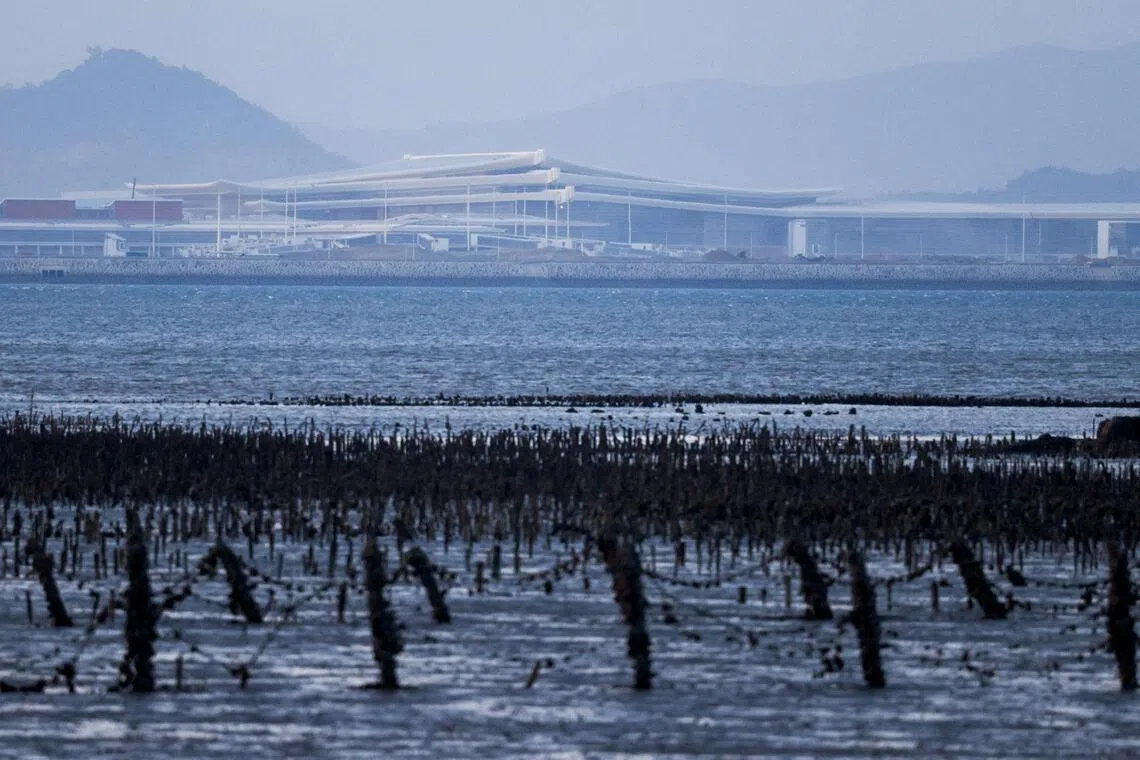
A new airport under construction in Xiamen, as seen from Kinmen, in 2025.
PHOTO: REUTERS
As the ferry pulls into the terminal in Kinmen, China’s Great Firewall evaporates. International apps like WhatsApp and Instagram can be accessed without a VPN, while Google Maps can be used for navigation and finding good places to eat.
After clearing customs, visitors can exchange Chinese renminbi for New Taiwan dollars at a money changer before hopping on a metered taxi to explore the Kinmen islands. Travellers can also easily rent a car or a scooter for more convenience and flexibility.
In contrast to the bustling city of Xiamen, the sleepy Kinmen islands offer a peaceful, slow-paced environment ideal for a relaxing getaway. The islands are filled with green spaces, sandy beaches and quiet villages, providing a scenic retreat.
On weekends, Kinmen is filled with tourists from Xiamen looking for respite. They typically stay overnight in Taiwanese minsu – locally run bed and breakfasts – fashioned out of traditional Minnan-style village houses, such as the well-preserved red brick structures in Shuitou village.
Local delicacies are another draw, whether they are Kinmen’s specialty of rock oysters – fried in omelettes or cooked in soup noodles – or its unique version of congee, where the rice has been simmered for so long that it has dissolved completely into a silky soup.
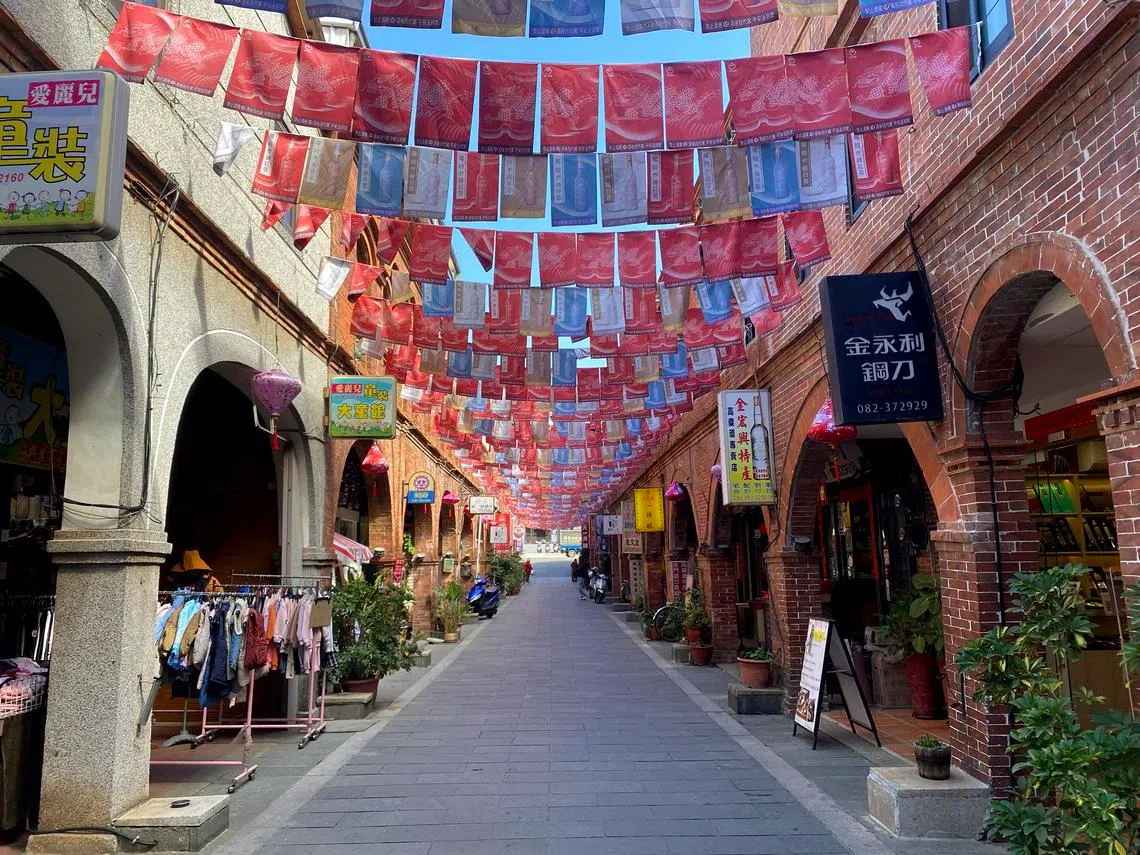
On weekends, Kinmen is filled with tourists from Xiamen looking for respite.
ST PHOTO: YIP WAI YEE
But the archipelago’s former status as the military front line for the Republic of China (Taiwan) against mainland China in the decades following the end of the Chinese Civil War in 1949 has also turned it into a unique tourist destination for those with an appetite for war history, and who want to explore the bunkers, tunnels and other military sites.
The Zhaishan Tunnel, for example, is a feat of engineering created during wartime to store as many as 42 military vessels.
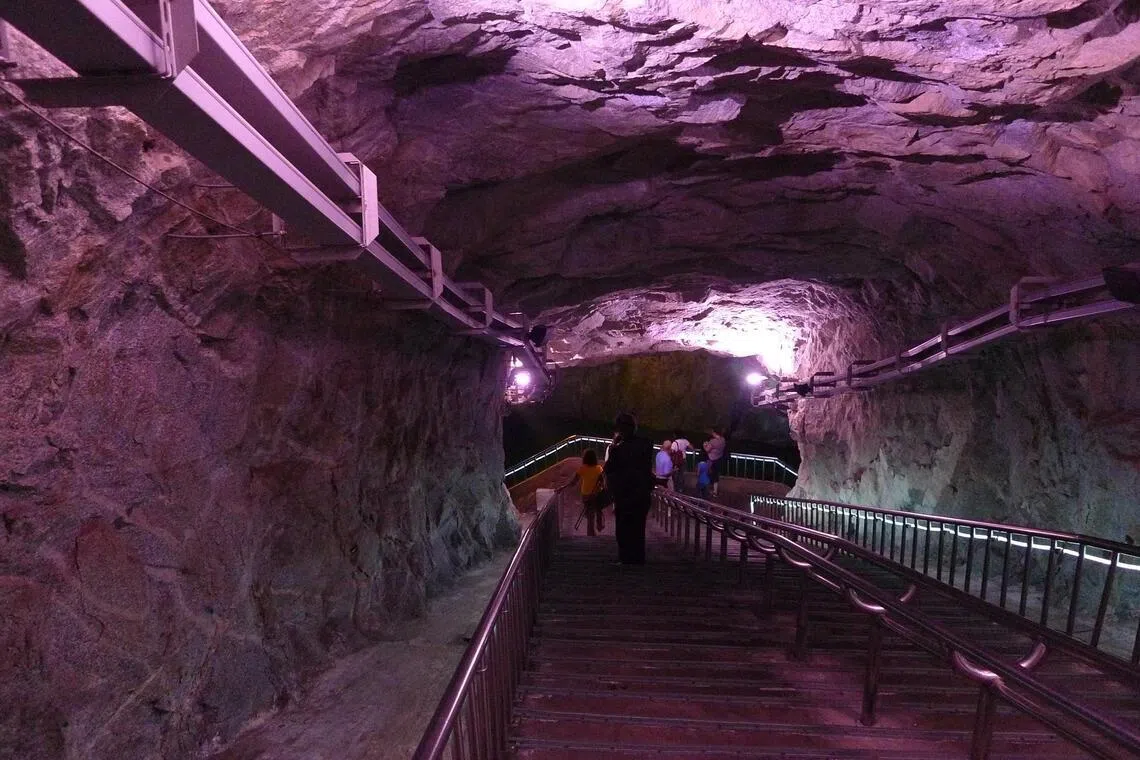
The Zhaishan Tunnel in south-western Kinmen, Taiwan, is a popular tourist attraction.
PHOTO: YONG SHU HOONG
Meanwhile, famously sharp knives crafted from used artillery shell casings are popular with tourists as souvenirs.
Communist Chinese forces had fired nearly one million artillery shells at Kinmen by the time active fighting ended in 1979, when Washington switched diplomatic recognition from Taipei to Beijing.
Today, tourists can see just how close China is to Kinmen through binoculars at the highest point of the Mashan Broadcasting and Observation Station. During wartime, the station was used by Taiwanese troops to broadcast propaganda messages to the Chinese army across the waters to convince them to surrender.
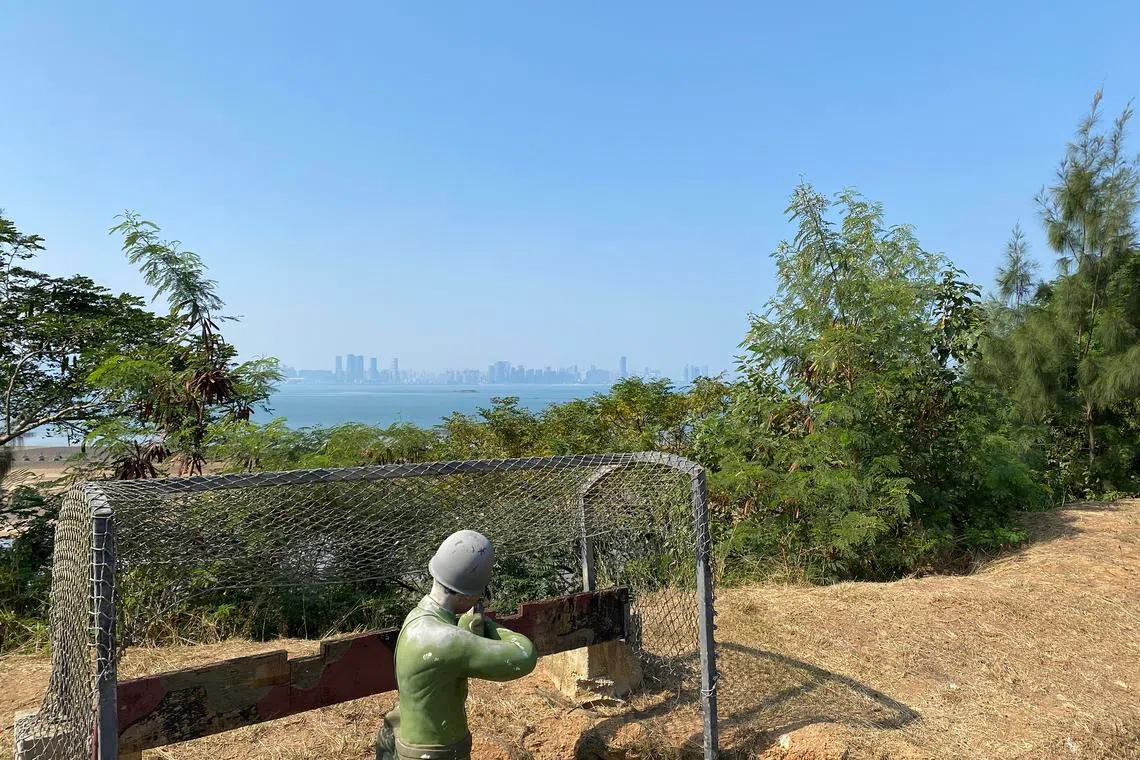
The Chinese city of Xiamen is easily visible from Kinmen’s Maogongshi Island Recreation Area.
ST PHOTO: YIP WAI YEE
At Kinmen’s Shuangkou Beach, one can see Xiamen’s skyscrapers across the sea even on a foggy day. Thousands of rusty anti-landing spikes poking out of the sand on the beach demonstrate that it is clearly not meant for swimming.
Instead, they are an enduring reminder of the fragile and complex nature of cross-strait relations, with Kinmen residents in a delicate position balancing loyalty to Taipei amid increasing economic reliance on Beijing.
For travellers pressed for time and not inclined to stay the night, there is the option of returning to Xiamen by ferry the same day. Ten services operate each day, with timings varying by month – for this month of April, the last ferry leaves Kinmen at 5.30pm.
