
Donald Trump’s anger with Europe has a definite upside
There’s much that’s up in the air as talks begin between the US and Iran in Pakistan this weekend, from the Strait of Hormuz’s closure to the exchange of fire in Lebanon. But it’s increasingly clear there will be a “before” and “after” the Iran crisis for America’s European allies as the transatlantic relationship plumbs new depths.
Click here to track live developments on Iran war
Donald Trump’s administration has decided that leaders such as Britain’s Keir Starmer and France’s Emmanuel Macron are the perfect scapegoats to deflect perceptions that the US has been strategically humbled and Iran empowered despite its military losses and destroyed infrastructure. The North Atlantic Treaty Organization “wasn’t there when we needed them,” the US president posted on social media, and he’s reportedly considering closing bases in European nations deemed unsupportive. While Italian President Sergio Mattarella and German Chancellor Friedrich Merz protest loudly that the alliance is “irreplaceable,” something has also quietly snapped on the continent, too.
Several countries’ refusal to allow American access to European bases during the war marks a further fraying of ties already severely weakened by the White House’s aggressiveness over Greenland, chumminess with Vladimir Putin and succor of far-right political insurgents across the Old Continent. Public opinion here is taking an anti-MAGA turn and certain governments are doing more than paying lip service to military self-reliance — look at Berlin’s defense budget. The fightback against Trump’s local fellow travelers will secure its biggest victory yet if Hungary’s voters do remove Viktor Orban in Sunday’s election.
Also Read: Trump blasts NATO over Iran war, revives Greenland threat
The specter of high inflation and slow growth caused by America and Israel’s war of choice in the Persian Gulf has obviously not pleased the Europeans. But repeated humiliation also explains the fractious mood. Despite substantially increasing purchases from US defense companies in recent years, Europe has found itself on the receiving end of angry resentment, trade blackmail and annexation threats. A poll of six European Union countries published by Politico this week found that China is seen as less of a danger than the US.
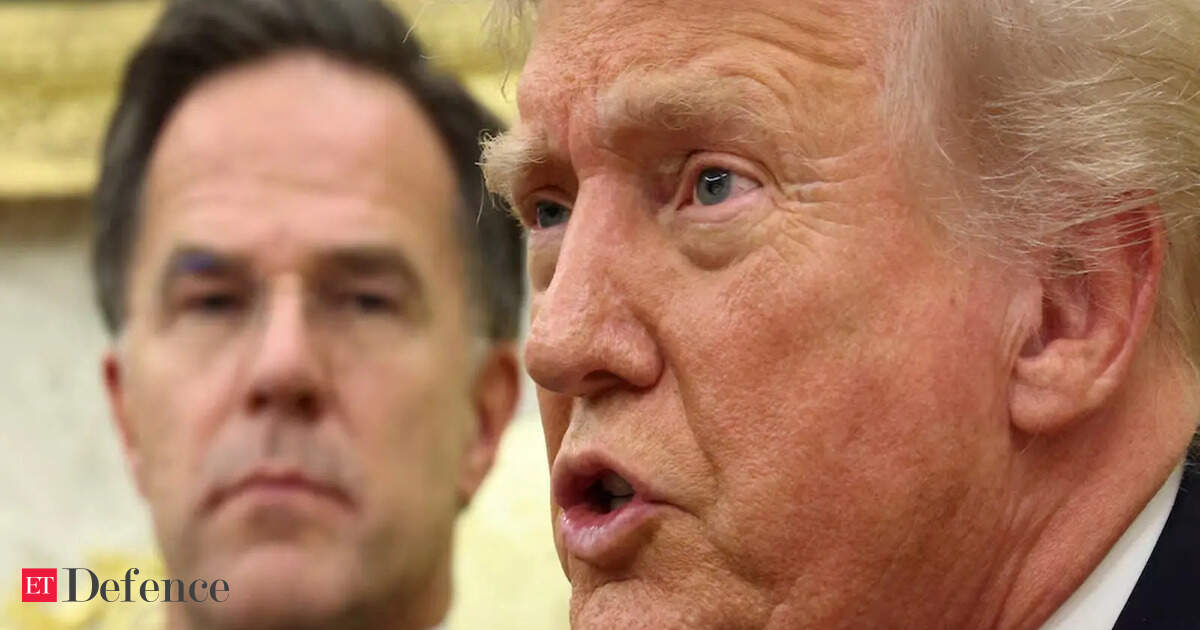
The sight of NATO chief Mark Rutte emerging wordlessly from a Washington tongue-lashing spoke volumes this week. The ex-Dutch prime minister has symbolized an increasingly bankrupt Trump-whispering approach: Smile politely, keep buying US weapons, and support for Ukraine and continental security will remain intact. “The US-Iran war has called this entire model into question,” writes Giuseppe Spatafora of the EUISS think tank. The US is likely to prioritize replenishing its own arsenals over Europe and Ukraine’s needs.
This low point for transatlantic ties is, of course, dangerous for both sides. The US benefits from a $1.5 billion trading relationship with Europe in which it’s a dominant defense and technology supplier. And with the fate of maritime traffic in Hormuz up in the air, it will help to have the power projection of a broad coalition able to bolster security in a waterway through which a fifth of the world’s energy supplies flow.
For their part, Europeans don’t want to antagonize Trump any further, and can use their willingness to help police postwar Hormuz to moderate some of his fury. A shifting of American military bases from Germany or Spain to the EU’s eastern flank would have profound consequences, not least if it lets the US administration’s Brussels bashers split the continent’s NATO members along East-West lines. Unity and security would suffer, as would the drive for a coherent approach to rearmament.
Some Europeans will also see the Iran peace talks as a chance to offer Trump alternative coalitions to his partnership with Israel, especially when trying to secure a ceasefire in Lebanon, where Belgium’s foreign minister narrowly avoided a missile attack this week.
Starmer and Macron have both at various points engaged in their own Trump whispering, the British prime minister more recently. But they’ve shown steel in the past few weeks to resist his efforts to bully Europe into a fight it never wanted. Maintaining this Anglo-French balancing act will be crucial during a vital window for diplomacy. The “middle powers” of Mark Carney’s description should keep their focus on casting the net wide for like-minded allies and coalition-building in Hormuz, which would serve the dual purpose of cooling the vengeful Trump and reducing the likelihood of future economic and energy shocks. There have been successful examples of this kind of maritime effort in the past, such as in the jointly managed Strait of Malacca.
Europeans also need to ruthlessly defend their own interests by not allowing Hormuz to become a waterway where cryptocurrency or yuan tolls become the norm. That will necessarily involve some tough debates about what leverage Europe can wield, including the lifting of economic sanctions on a Tehran regime that has brutally repressed its own people.
And longer-term, even if trade-focused Europe is a prime loser in a world of weakening alliances and an eroding rule of law, it must recognize the potential silver lining offered by economic and defense integration. There’s an opportunity to revive support for the many blueprints for EU reform — including former European Central Bank chief Mario Draghi’s competitiveness model — if leaders seize the moment. With the UK turning back toward its former continental partners, and the possible electoral defeat of Putin and Trump’s EU acolyte Orban, this could be a much bigger turning point than it looks.
