
Technologist warns sinister consequences of new AI superintelligence

David Orson Newton’s new book explores advanced AI that sees humans as cavemen painting on walls (Image: Stock image)
Spring 2016 – I remember the conversation as if it were yesterday. I was studying in Silicon Valley along with 200 other handpicked executives from around the world. As part of our programme, we would step into the Valley’s top disruptors. Another day, another glitzy tech giant campus. After the glass-walled atriums, free cafes and sprawling meditation gardens, we entered a vast air-conditioned, soundproofed lecture hall with rows upon rows of red seating running from front to back up a gentle incline. Out front was a raised wooden stage. The space looked more like a theatre than a lecture hall.
And then the music started. Loud electro house played as video snapshots of the tech company’s latest accomplishments flashed across the wall behind the stage. Billions of active app users. Billions in advertising revenue. User retention (how many eyeballs keep coming back) is hitting its highest levels ever… Then, one of the organisation’s many illustrious leaders stepped out onto the stage. T-shirt, jeans, trainers – the tech uniform. He raised his hands to quiet the audience and opened with, “Folks, we’re just getting started!” Cue cheers from the assembled masses.
The “intimate fireside chat” in a vast room full of hundreds of people was kept to a script – “lines to take” had clearly been agreed in advance. It was all very sanitised. But afterwards, in a breakout area allowing for a more conversational atmosphere, the leader began to relax. He was clearly enjoying the adoration of these young, fledgling executives eager to make their mark on the world. We were putty in his hands.
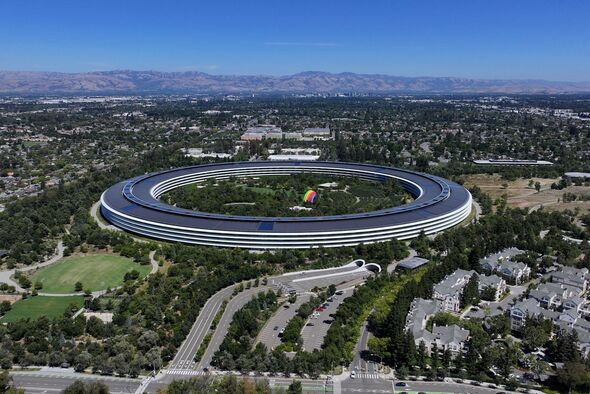
An aerial view of the Apple corporate headquarters in Silicon Valley (Image: Getty Images)
It seemed to me, a former Army captain and technologist, that he wanted to say more than he was saying. He had run out of his approved stats and talking points, and, eager to impress, was relishing being peppered with intelligent questions that he could easily dispatch one after another.
One of my fellow execs who had a legal background – in-house legal counsel for a major European blue chip – asked, “What about regulation? Does increased regulation worry you?” The leader turned to face the question’s owner. She looked sincere and the frown suggested a genuine concern. He then broke into a laugh.
We all looked around at each other. One of those awkward crowd moments, with no one really sure how to react. The leader then stopped and adopted a more serious tone. “Look,” he said, “we’re so far ahead of regulation that they – the governments – can’t catch up. We’re moving too fast.”
For me at least, that was the moment the penny dropped. Glacial governments led by old men competing with some of the smartest, most technical, most driven young humans on earth.
It could only ever end one way. I didn’t have children at the time, but I thought of my young nieces and nephews and the world they would be growing up in. What subsequently played out with social media over the coming years should serve as a warning to us all.
Countries around the world are only now waking up to the devastating consequences of that slow decision- making around regulation, from brain rot to reduced attention spans and teenage mental health concerns. Australia has just implemented a world-first ban prohibiting children under 16 from holding social media accounts. Other countries, including the UK, may follow suit.
But for Gen Z, which consists of individuals born between 1997 and 2012, now aged 14 to 29 and who are critical to the global workforce, is it too late?
What that story of unchecked power, greed, and growth-at-all-costs should do for us is make us question whether the same group of people in the same part of the world have our best interests at heart when it comes to Artificial Intelligence.
AI, as it exists in our hands today – helping with emails, responding to customer service requests, analysing data and preparing PowerPoint presentations, doesn’t concern me too much. But when we reach Artificial General Intelligence, an AI as intelligent as any human, we will start to see huge workforce displacement.

David Orson Newton’n new book explores a world where humans are subservient to machines (Image: Supplied)
But it is Artificial Superintelligence that I fear the most. ASI is a machine that exceeds human intelligence. In the realm of ASI, machines will be operating so far ahead of our collective capacity to understand that we will be at a very real risk of losing control. Whether we need to reach ASI or not is a debate in and of itself. Do we need an AI more intelligent than any human?
But, true to form, Silicon Valley isn’t waiting for any grey-haired government officials’ decision. The Silicon Valley mantra is to move fast and break things. But what happens if the thing we break is society itself? With huge job displacement, what do people do for work? How does a government fund itself and its manifesto pledges with vastly diminished tax receipts? The Gods of Silicon Valley will tell us not to worry our pretty little heads – they’ve thought ahead, they have a plan.
It’s called Universal Basic Income. We all receive the same flat-rate salary and get to spend our days pursuing leisure – playing football, going to the pub, spending time with our loved ones. It sounds great, right? But here’s the catch. What happens when the machines decide to reduce our UBI because they’re simply fed-up of seeing photo reels of Dave living his best life?
What happens when the machines decide that the money being spent on UBI could be redirected into building more robots or going to Mars? What happens when they decide humans are just a bit useless and not really good for much?
That’s an AI Doomer narrative and not one I subscribe to. But some go further still and invoke visions of a Terminator-like future – robots cutting across the Earth’s surface zapping humans with lasers.
I think the truth is somewhere in the middle, a future where humans work alongside machines, where roles are displaced, as in the industrial revolution, but where new industries, companies, and jobs emerge for those displaced workers. A more efficient and effective society for all.
But there is one rather large fly in the ointment. We might not be at the table when the key AI decisions are made. And by we, I don’t mean the UK. That ship sailed a long time ago. I mean the whole continent of Europe.

Australia has just implemented a world-first ban prohibiting children under 16 from holding social media accounts (Image: Getty Images)
The race to achieve ASI is a marathon. We here in the UK and Europe are still deciding which training plan to follow and which trainers will look good on social media. The US and China are at mile 20 and are neck and neck. Both countries want to cross the finish line first. It’s winner takes all, and with world domination on the table, the stakes couldn’t be higher.
This is the subject that I address in my debut novel, Seconds To Midnight, in the all-out race to reach ASI. Guardrails are being dropped, relative information sharing between the great nuclear powers – historically well applied to nuclear weapons through an understanding of Mutually Assured Destruction – has stopped (or arguably never started) for AI.
Open companies in the AI space are now closed. It’s a gun fight and anyone with a knife doesn’t stand a chance. China and the USA have the guns. Espionage on both sides is now the route to understanding where the other side is at in their quest for ASI.
And let me be clear, I don’t roll out the old trope of robots attacking humans – that’s been done. I take a much more sinister path based on hundreds of hours of research, conversations and real-world experience. I explore a scenario where the machines pretend to be our friends and allies, but in secret, they’re not following the human script. They see us as cavemen painting on walls. A pet to pat on the head when we answer correctly.
The machines are operating millions of moves ahead, running sequences we can’t compute. We follow five humans who
navigate this world over one year, from 2029 to 2030. The clock is ticking. It’s Seconds To Midnight. There can only be one winner.
But in your daily lives today, don’t avoid AI. We must embrace the best of AI and, as I mentioned earlier, learn to work with it, harness it, and control it.
● Seconds To Midnight by David Orson Newton (Chiselbury, £10.99) is published on April 23 and available to pre-order now
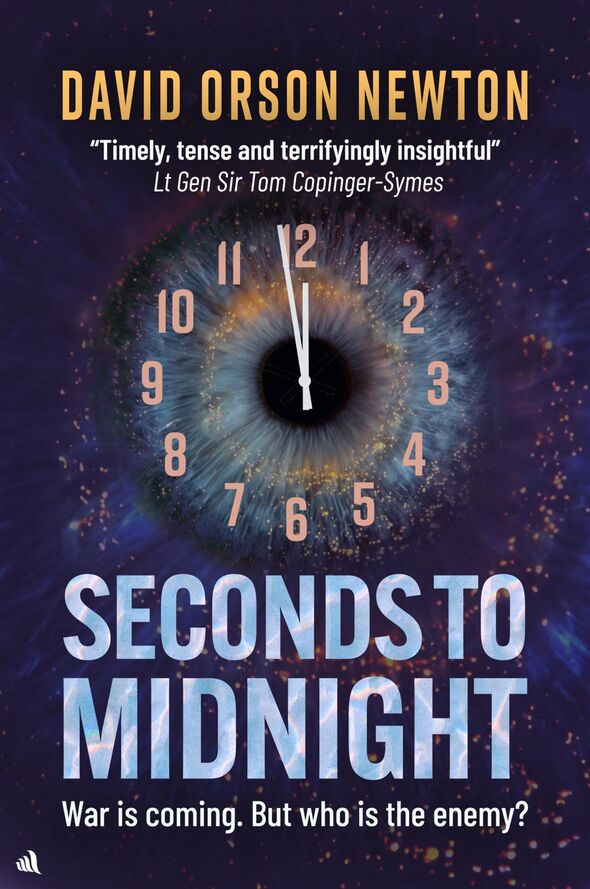
Seconds To Midnight by David Orson Newton (Chiselbury, £10.99) is published on April 23 and available to pre-order now (Image: Supplied)
