
The World’s Largest Air Forces By Number Of Bombers
There are just three nations in the world with air forces that operate strategic strike bombers: the United States, China, and Russia. Today the Chinese Air Force has the world’s largest bomber fleet by total number of planes, estimated at roughly 200 to 230 aircraft. The US Air Force (USAF) has the second largest with 142 active airframes, while Russia comes in third with approximately 120 to 150 bombers.
The most important differentiator, however, is not the actual number of planes but rather the readiness level and modernization of the airframes themselves. The Chinese Air Force has the largest fleet, but the performance, payload, and technological capability of those aircraft are far eclipsed by the American fleet. The Russian Air Force has a better mix of modern bombers than China, but its numbers have dwindled significantly in recent years, and the true readiness level is speculative at best.

Credit: US Air Force
In this comparison, the US does not lead overall, but per type, its inventory is unique in that it has a significant number of combat-ready units in addition to cutting-edge aircraft. As it moves from the 5th-generation B-2 to the 6th-generation B-21 Raider, the US continues to be the only country with a proven, operating fleet of stealth bombers. The air force never even created a jet-powered platform like the Boeing B-52 Stratofortress, even during the height of the Soviet Union.
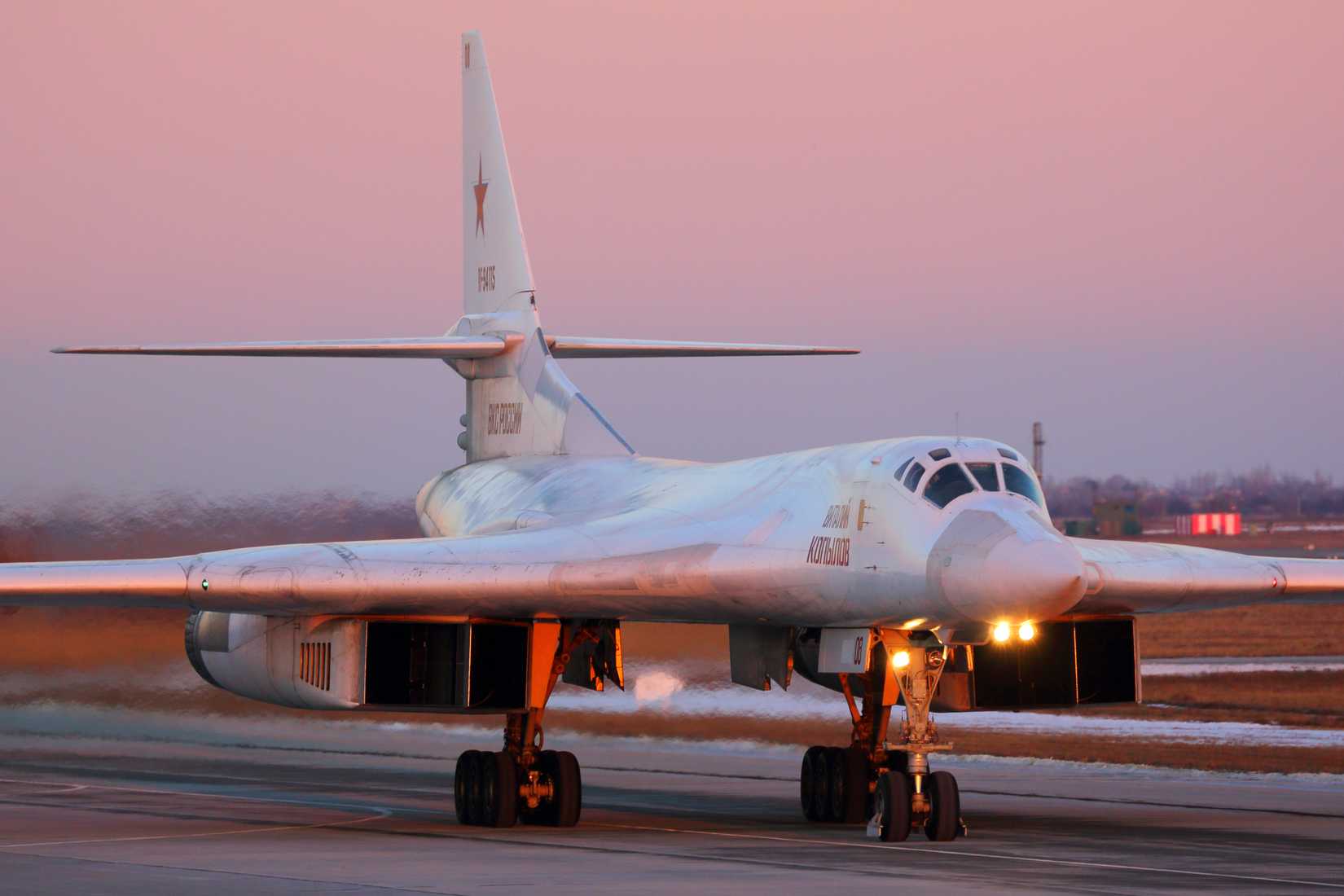
The main platforms of the Russian and Chinese bomber fleets are the turboprop Tupolev Tu-95 Bear and the jet-engine Xi’an H-6. The Russian strategic air forces also have the Tu-22M Backfire and Tu-160 Blackjack, which are identical to the Rockwell B-1B Lancer. These supersonic bombers are becoming increasingly scarce as they are damaged during the invasion of Ukraine, and Tupolev is struggling to produce more or sustain the ones that are already in service.
The competition for advanced platforms displays a distinct divide: the United States is extending its lead in the fifth and sixth generations. China has mastered regional air power with its J-20 stealth fighters and is now attempting to skip 40 years of development to field a 5th-generation strategic bomber. US officials currently categorize China as a regional force, but acknowledge that mass production of the H-20 could eventually bridge their global strike deficit. Russia is still limited to ‘paper planes’ on the drawing board.
China’s Bomber Fleet: The PLAAF
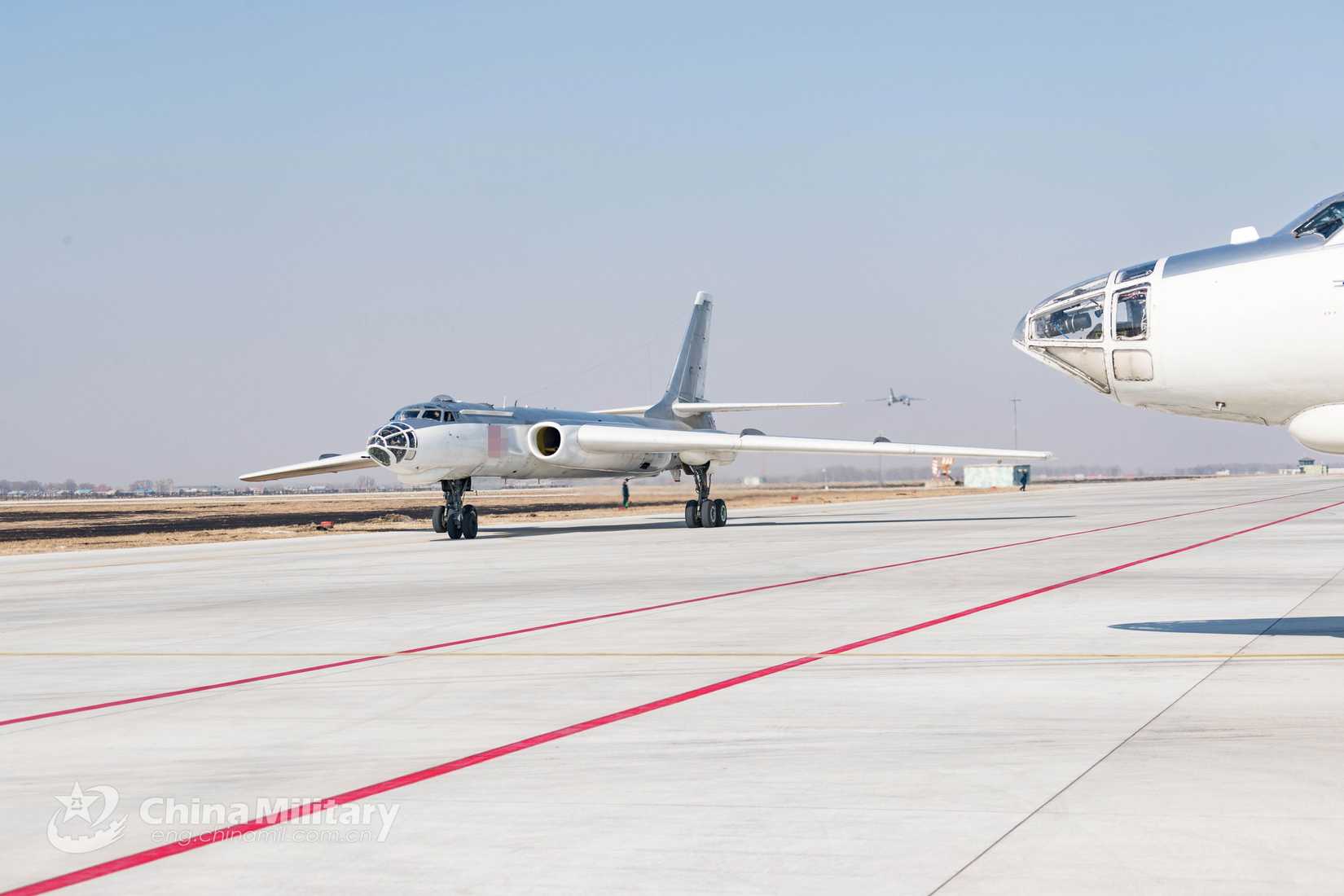
Credit: PLAAF
The People’s Liberation Army Air Force may have the largest bomber force, but it has the lowest performance and the most obsolete airframes of the three. The fleet is entirely made up of Xi’an H-6 variants, which are heavily modified versions of the Soviet Tu-16 Badger from the 1950s. Newer models, such as the H-6K and H-6N, have modern turbofan engines, aerial refueling probes, and the capacity to carry long-range cruise missiles or air-launched ballistic missiles, but they are still outperformed by numerous Russian and American bombers in all categories except cost.
As the primary long-range workhorse, the H-6 has been updated to feature glass cockpits, standoff weapons, and new avionics to adapt the 70-year-old jets to modern air warfare. It can carry up to six YJ-12 supersonic or CJ-10 cruise missiles, allegedly allowing it to target US and allied assets as far as Guam, in the Second Island Chain, from the Chinese mainland.
The H-6K variant is a maritime platform optimized for anti-ship missions with electronic warfare pods and anti-ship ballistic missiles. Finally, the H-6N is made for one mission: nuclear deterrence. This bomber established the airborne leg of China’s nuclear triad. It has an aerial refueling probe and a recessed bomb bay designed to carry a single large air-launched ballistic missile.
Pixelated photos of what could be a PLAAF flying wing bomber similar to the B-2 in flight have surfaced in recent social media leaks, although none are currently confirmed to exist. The H-20, a tailless bomber with intercontinental strike capabilities akin to the US B-2 Spirit, is reportedly being developed by China.
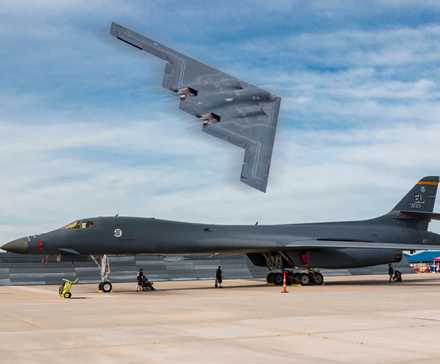
The Real Reasons Why The B-2 Spirit Won’t Be Retiring Before The B-1 Lancer
The USAF’s Flying Dorito is outlasting the mighty Bone.
Global Strike Command: The American Armada
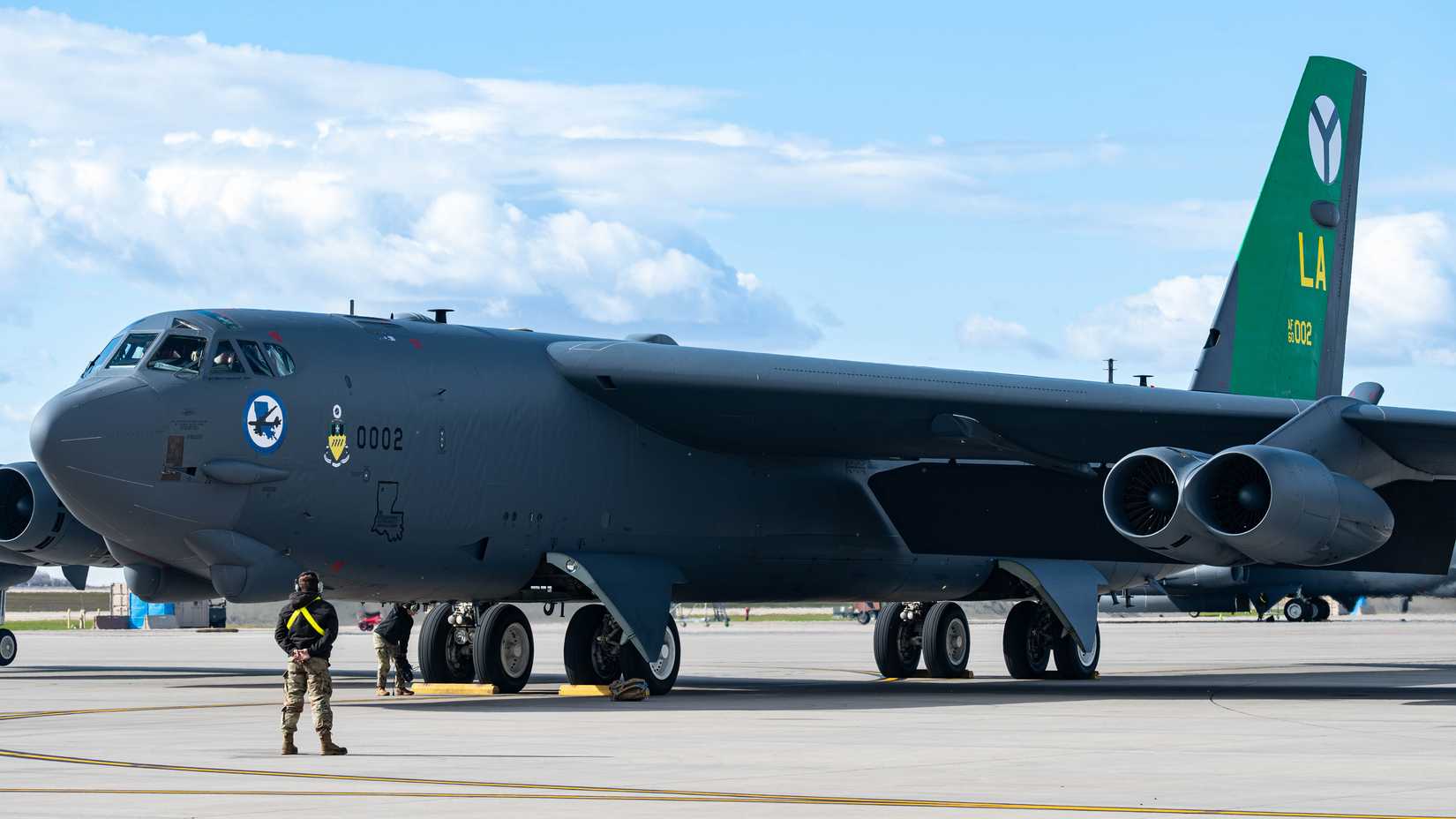
Credit: US Air Force
The Air Force Global Strike Command is in the midst of a major transformation as the fleet, which currently operates three different airframes of significantly different designs and missions, will be reorganized completely. The next era in the history of the AFGSC will see the fleet reduced to just two airframes with complementary missions.
The USAF is the sole operator of the first fifth-generation heavy bomber ever made, the Northrop Grumman B-2 Spirit. The B-2 Spirit fleet is planned for retirement by the early-to-mid 2030s, when it will be fully replaced by the new B-21 Raider 6th-Gen bomber. Meanwhile, the Rockwell B-1 Lancer is slated for retirement by the mid-2030s as the USAF transitions to the new B-21 Raider. However, the remaining fleet is currently undergoing significant upgrades to remain a vital part of the US strategic bomber force until its replacement is fully operational.
|
BOMBER |
TOTAL FORCE |
|---|---|
|
B-1B Lancer |
46 |
|
B-2A Spirit |
20 |
|
B-52H Stratofortress |
76 |
|
B-21 Raider |
2 |
|
TOTAL |
144 |
The Air Force plans to acquire at least 100 B-21s, which will form the backbone of the future bomber force, but there is speculation that the final total may reach as many as 200 airframes. The B-21 Raider will fundamentally reshape the Air Force’s strategic strike bomber fleet by creating a modernized, two-asset structure, combining the advanced B-21s and ‘missile truck’ B-52s.
Of the three strategic bombers currently in service with the USA, only the BUFF is expected to serve alongside the B-21 as part of the long-term strategy. The B-1 and the B-2 will both be phased out as soon as sufficient numbers of B-21s become available to maintain force readiness levels and allow the legacy airframes to be mothballed in the boneyard at Davis-Monthan AFB.
The 4 Largest Air Force Bases By Bomber Fleet Presence
A closer look at the homes of the USAF’s heaviest-hitters.
The Russian Strategic Strike Force
Credit: Shutterstock
Since the dissolution of the Soviet Union in 1991, the Russian Aerospace Forces (VKS) has transformed from a global behemoth of 13,000 aircraft into a significantly smaller, hollowed-out force struggling with systemic maintenance failures and high attrition. The primary driver of decline was the catastrophic economic collapse of the 1990s, which slashed defense budgets. However, that slow rot has been significantly accelerated by the invasion of Ukraine, which is seen as a rapid loss of airframes from direct combat, surgical strikes, as well as sabotage.
Reports indicate Russia has lost approximately 435 planes and 350 helicopters since the invasion of Ukraine began in 2022. Mass mobilization for the war in Ukraine has drafted skilled engineers and technicians into frontline service, causing production line shutdowns and quality control failures. To keep a fraction of the fleet flying, Russia has resorted to total disassembly, aka cannibalization. Airfields are stripping older or foreign-made airframes, like Airbus and Boeing jetliners, for parts to service remaining airframes.
The Russian defense industry, managed by the state conglomerate Rostec, is now in a state of regression. Western sanctions have effectively blocked the import of high-end microelectronics and even aircraft tires. Major modernization programs like the PAK DA stealth bomber and MiG-41 interceptor remain largely theoretical due to funding gaps and an inability to bridge the gap from blueprints to serial production.
The 4 Largest Bomber Fleets In The US Air Force
A closer look at some of the biggest warbirds in America.
The Race For 6th-Gen Technology
Credit: US Air Force
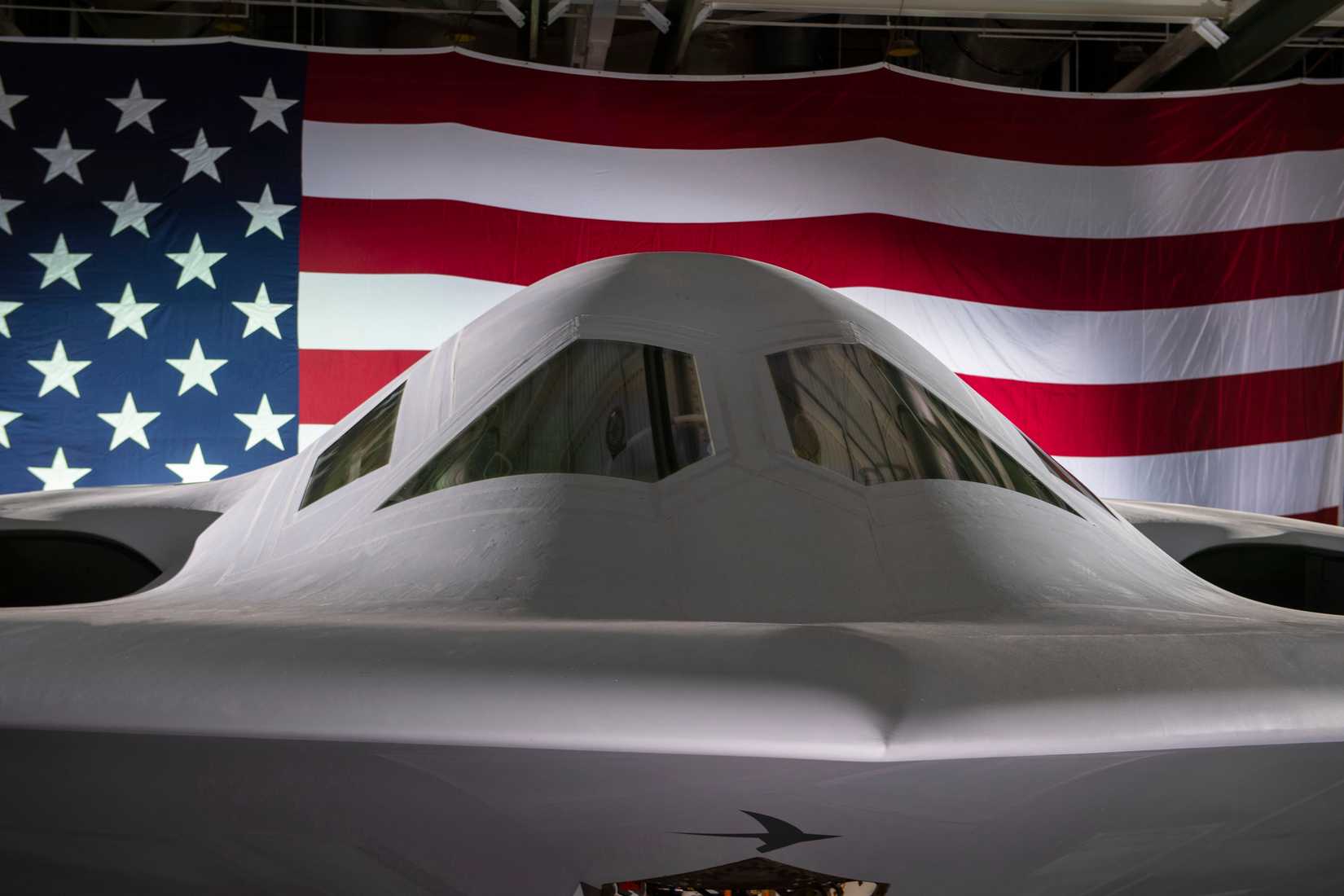
Currently in testing at Edwards AFB, the B-21 Raider built by Northrop Grumman will be the first sixth-generation aircraft in the world when it enters service. The plane appears to simply be a scaled-down B-2 Spirit at first glance, but it represents a highly refined design built on the original technology pioneered by the flying wing that came before it as the world’s first fifth-generation bomber.
The B-21 Raider will be smaller and have only two engines, compared to four in the B-2, a move designed to overcome the extremely costly, labor-intensive maintenance demanded by the Spirit. The new bomber will have a smaller payload but will be more readily deployable to disperse the bases and have the same or greater range with a far more effective multi-spectral stealth profile.
On the other side of the globe, China is rapidly iterating on 6th-generation concepts, focusing on Next-Generation Air Dominance equivalents that blur the line between fighters and bombers. The H-20 is China’s highest-priority strategic platform, intended to give the PLAAF a true intercontinental reach. Despite official claims that a debut is imminent, the H-20 program is currently described by some analysts as frozen in time.
While unverified imagery suggests flight testing of flying-wing prototypes has occurred, U.S. intelligence predicts it will not be fully operational until the 2030s. In the meantime, there have been leaks of other bombers that appear to border on 6th-Gen tech. The J-36 is a large, tailless delta-wing supersonic strike platform. The J-50 appears to be a low-observable platform as well. Both the J-36 and J-50 are flying wing designs to reduce radar cross-sections (RCS) against low-frequency radars like the B-2 and B-21.
