

Japan strikes combat role in South China Sea in post-war pivot
TOKYO – Japan’s decision to send combat troops to the Philippines for the first time since World War II and participate in a ship-sinking drill in the South China Sea this week underscores Tokyo’s rising willingness to project military power on China’s doorstep.
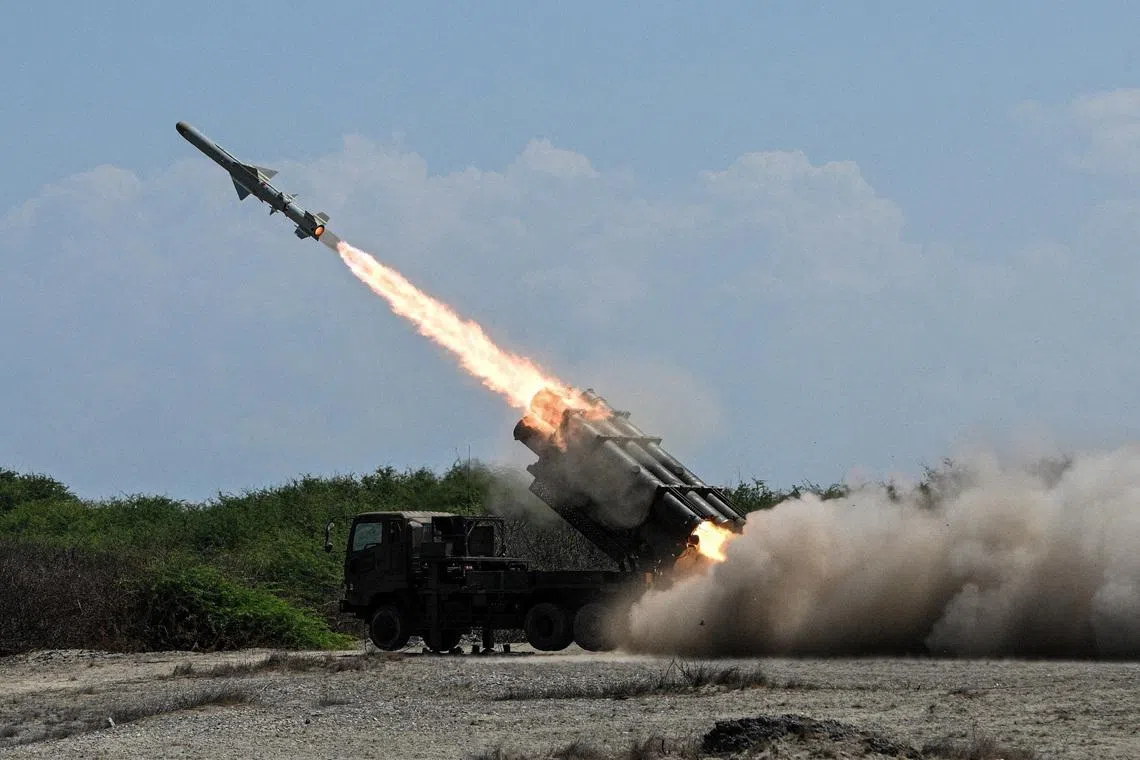
Along with US and Philippine forces, the Japanese military fired missiles in a practice sinking of a mock enemy ship off the northern Philippines’ Ilocos Norte on May 6.
The exercise is one of the highlights of the annual US-Philippine combat drills – known as Balikatan, or “shoulder to shoulder” – with Tokyo participating in a combat role for the first time.
This year’s Balikatan, which ends on May 8, was joined by a record of more than 17,000 troops from seven nations. Japan is deploying 1,400 troops, making it the war games’ third-largest contingent.
For decades, Japan has restricted most of its military training to its own territory or in far flung locations such as the US and Australia.
The Type-88 missiles Japan used on May 6 were first tested on its northern island of Hokkaido in 2025.
But since coming to power in 2025, Prime Minister Sanae Takaichi has shown a greater willingness than her recent predecessors not to be intimidated by Beijing.
Her suggestion in November 2025 that Japanese troops could be deployed if Beijing tries to seize Taiwan through military force infuriated China, which has accused her administration of pursuing “neomilitarism”.
Japan has also recently scrapped most restrictions around the sale of military hardware and Ms Takaichi has signalled a softening of its anti-nuclear weapon principles, which have also drawn rebukes from China.
Many of the component parts of Balikatan that Japan has been involved in – from maritime strikes to amphibious operations to missile defence – would be important in a potential conflict over Taiwan, said Dr Naoko Aoki, an East Asian security specialist at the RAND Corporation.
“To China, it is a demonstration of stronger cooperation between Japan and its defence partners as well as Japan’s increased combat readiness,” she said.
China has been critical of the drills.
The deputy spokesperson of its Manila Embassy posted on Facebook on May 3: “The region needs peace and stability, not bloc politics. Outsourcing security to external powers rarely ends well – it usually backfires.”
Shared concerns over China have drawn Manila and Tokyo together.
The deployment of Japanese troops for Balikatan was made easier by an agreement that entered into force between Japan and the Philippines in 2025 removing legal hurdles to military exchanges.
Ms Takaichi is also keen to show the US that Japan is a more valuable military partner amid criticism from the Trump administration about allies’ over-reliance on the US.
Some security experts see a direct link from Balikatan to support for American forces deployed to the Middle East, including warships and troops sent from bases in Japan.
“Japan’s participation in Balikatan is a clear deterrence signal to Beijing not to attempt a takeover of Taiwan while the US is busy in the Middle East,” said Dr John Hemmings, director of the National Security Centre at The Henry Jackson Society.
Tokyo’s dispatch of two amphibious ships and a destroyer for Balikatan, alongside aircraft, anti-ship missiles and air-and-missile defence systems, shows how much more capable the Japanese Self-Defense Forces have become.
“This is a far cry from just a few decades ago when Japan preferred observer status or only took part in search and rescue or logistics exercises,” Dr Hemmings said.
Meanwhile, the presence of Japanese combat troops in the Philippines for the first time since the brutality of the Imperial Japanese Army in the country in the 1940s may help decisively turn the page on the past.
And as Ms Takaichi aims for acceptance within Japan for its defence forces playing a greater regional role, Balikatan has offered a showcase of how it can contribute to shared security with other Asian nations, Dr Aoki said.
It helps shape the view that Japan fields “a competent force that regularly exercises with non-US defence partners”.
Japanese Defence Minister Shinjiro Koizumi is expected to be on hand to observe the joint maritime strike alongside his Philippine counterpart Gilberto Teodoro Jr., a day after saying they aim to finalise the transfer of Abukuma-class destroyer escorts.
The Philippines in 2024 officially shifted its priority to external defence from one that had been predominantly centered on fighting insurgents.
President Ferdinand Marcos Jr. has bolstered military ties with Washington, allowing US troops to access more Philippine bases and putting the South-east Asian on the frontlines of US-led efforts to deter Beijing.
Visiting forces agreements also were signed with Japan, Canada and France.
Meanwhile, pressure from Beijing grew as Manila asserted its claims in the South China Sea.
Coast guard ships from both sides have engaged in confrontation, with Philippines accusing China of ramming and firing water cannons on its ships. China maintains its actions are lawful. BLOOMBERG
