
Exclusive: China’s Ambassador Reveals What’s at Stake When Trump Meets Xi
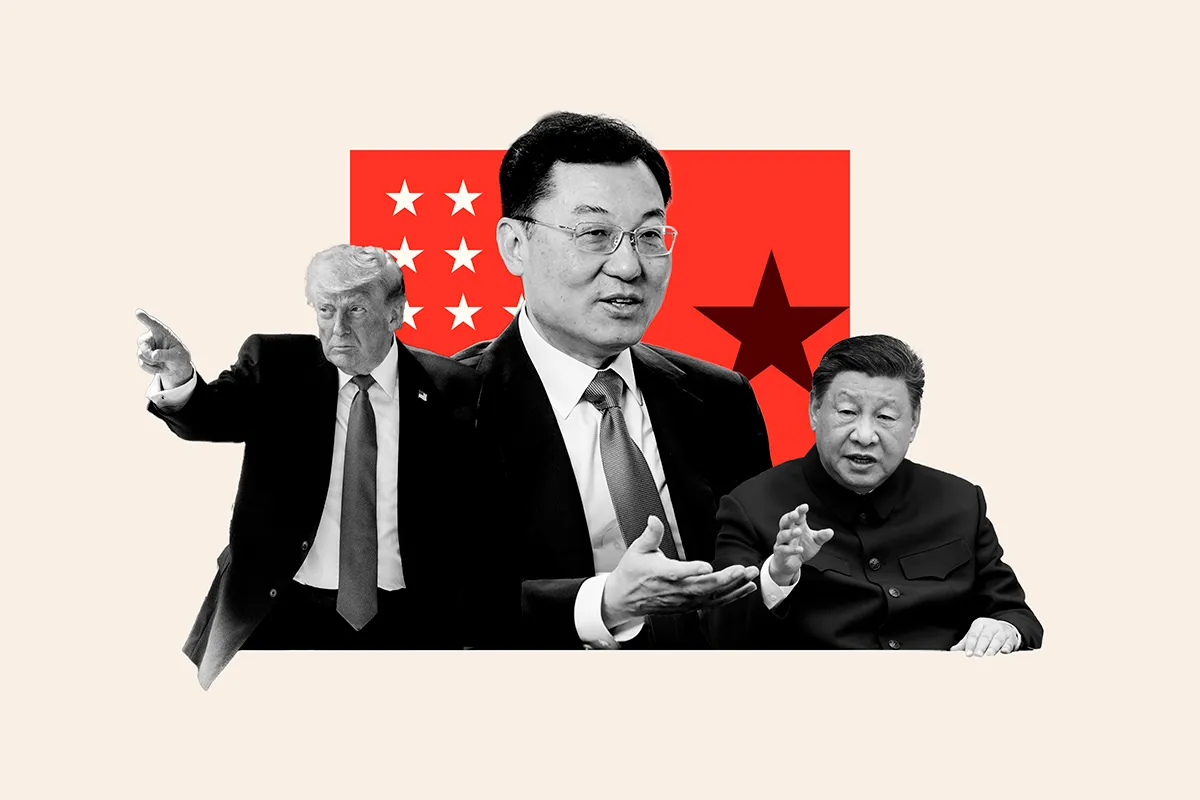
As U.S. President Donald Trump prepares to head to China on Thursday for a summit with Chinese President Xi Jinping, Beijing’s top diplomat in Washington has outlined to Newsweek his expectations for the high-profile encounter.
The two-day trip will mark the first of any U.S. leader to China since Trump’s last visit in 2017, as well as a key opportunity for two of the world’s most powerful men to discuss both bilateral and international issues at a moment of heightened turmoil rocking the global order. That includes America’s ongoing war with Iran, which has brought both risks and opportunities for China and put its relationship with the U.S. in the spotlight.
“In an increasingly turbulent world, the strategic value of China-U.S. relations becomes more prominent,” Chinese Ambassador to the U.S. Xie Feng told Newsweek during an exclusive, wide-ranging interview conducted on May 5. “A stable and constructive China-U.S. relationship not only serves the fundamental interests of both our peoples but also meets the shared expectation of the international community.”
Xie expressed hope that “the upcoming summit in Beijing will be a successful one, which will chart the right course for the future development of China-U.S. relations, and pave the way for making the list of dialogue and cooperation longer and advancing the positive agenda, while shortening the list of problems and properly managing differences, so that we cannot only promote the steady, sound, and sustainable development of bilateral relations this year.”
In addition, he hoped the meeting would “also explore a right way for China and the U.S. to get along in the new era based on mutual respect, peaceful coexistence, and win-win cooperation.”
As Washington and Beijing navigate challenges in both their relationship and trials afflicting global stability, he stressed the need to adhere to international laws and norms, which the two nations have at times accused one another of violating.
“No country should put itself above everyone else and apply the rules selectively,” Xie said. “Otherwise, human society could risk slipping back into a jungle.”
Courtsey of Chinese Embassy to the United States
Trump, Xi and the Iran Crisis
While often critical of China’s policies, Trump has regularly spoken positively of Xi. Last week, the U.S. leader described his Chinese counterpart as a “good man” and a “smart man” with whom he has “a very good relationship.”
The two leaders last met in October at a summit in the South Korean city of Busan. Xie said that this “successful summit” along with five phone calls and multiple exchanges of letters over the past year, worked toward “recalibrating the course of the China-U.S. relationship and steering it toward overall stability.”
Yet the U.S.-China relationship has not been spared the volatility that has come with the U.S.’ decision to launch a joint war with Israel against Iran in late February. Trump was initially scheduled to travel to China in late March but ultimately postponed the trip as the war in the Middle East escalated.
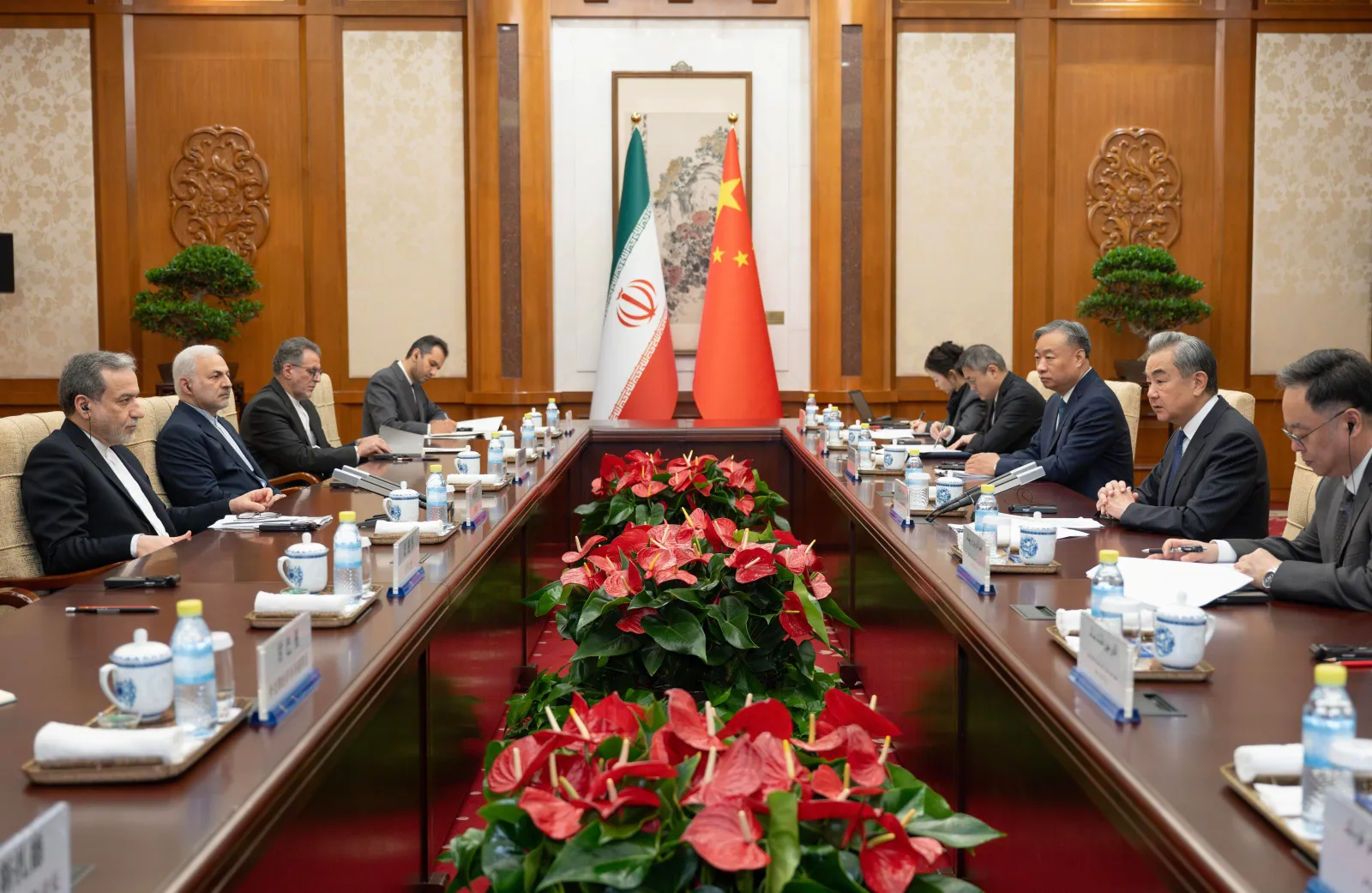
A massive drop in traffic through the Strait of Hormuz due to military operations and dueling Iranian and U.S. blockades has proven especially disruptive, including for China, which imports the most crude oil transiting through the maritime chokepoint and accounts for the vast majority of Iran’s energy exports. Beijing maintains close ties with both Tehran and Arab states drawn into the Persian Gulf conflict.
After Trump announced efforts to force open the Strait of Hormuz last month, he claimed China was “very happy” with the decision and that Xi would give him “a big, fat, hug” during their upcoming visit.
Yet the debilitating bottleneck remains in place. Meanwhile, Chinese officials have consistently called for peace and de-escalation, a sentiment reiterated by Xie.
“For people of all countries, peace is paramount, life is most precious, and stability is most needed. China always follows an independent foreign policy of peace, and opposes the arbitrary use of force in international relations,” Xie said. “From the first day of the fighting, China has steadfastly stood on the side of peace, and has been committed to promoting talks for peace and the cessation of hostilities.”
He highlighted diplomatic efforts launched by China, including a four-point peace proposal announced last month by Xi and since backed by Iran, as well as a five-point initiative established alongside Pakistan, which has mediated U.S.-Iran talks, in late March.
Xie also hit back at reports alleging that China was providing military aid to Iran, an issue that reportedly prompted Trump to reach out to Xi directly ahead of their upcoming meeting.
“Unfortunately, some individuals seem to feel the world is not chaotic enough, and have spread rumors that ‘China has benefited from the conflict’ and that ‘China is supporting Iran militarily,'” Xie said. “Their aim is to smear China, incite confrontation between China and the U.S., and sabotage bilateral high-level interactions.”
“All of this is fake news driven by ulterior motives,” Xie added. “We hope that people with discernment around the world will see through these lies and avoid being misled by them, let alone circulating them.”
Rather than gain from the conflict, Xie said China, together with other countries, has suffered from its fallout.
“For China and the rest of the world alike, the blockade of the Strait of Hormuz, the disruption of the international energy market, and the shocks to global industrial and supply chains are a disaster,” Xie said. “This is a war that should not have happened, and should be immediately stopped.”
“China hopes the U.S. and Iran will maintain the momentum of negotiation, and we support all efforts that help to bring the fighting to an end and restore peace and stability at an early date,” he added. “We will continue making unremitting efforts for peace.”
Soft Power Shifts
At the same time, Xie believed China’s policies, including the 15th Five-Year Plan, have served to strengthen Beijing’s global position. This comes as a number of Western leaders have accelerated engagement with China.
He described the nation’s strategy with a Chinese proverb, saying, “Peaches and plums do not talk, yet a path is formed beneath them.” He followed up by stating, “China’s domestic and foreign policies are consistent, and we always do the right thing.”
“At home, we are committed to pursuing Chinese modernization on all fronts, focusing on managing our own affairs well, and becoming a better version of ourselves, so that our people can lead a better life,” Xie said. “Internationally, we are committed to forging a community with a shared future for humanity, and joining hands with all countries to follow the path of peaceful development, implement the four global initiatives on development, security, civilization, and governance, and advance the development and progress of human society.”
“As a result, a growing number of countries are seeing China as a cornerstone of certainty, a harbor of stability, and a friend worth having,” he added. “That is why China’s ‘community of friends’ keeps expanding.”
There appears to be real-world impact as well.
A recent survey published by Gallup indicated that global approval of China edged past the U.S. for the first time in eight years. In the U.S., the public perception of China is also improving, according to a poll conducted in March by the Pew Research Center.
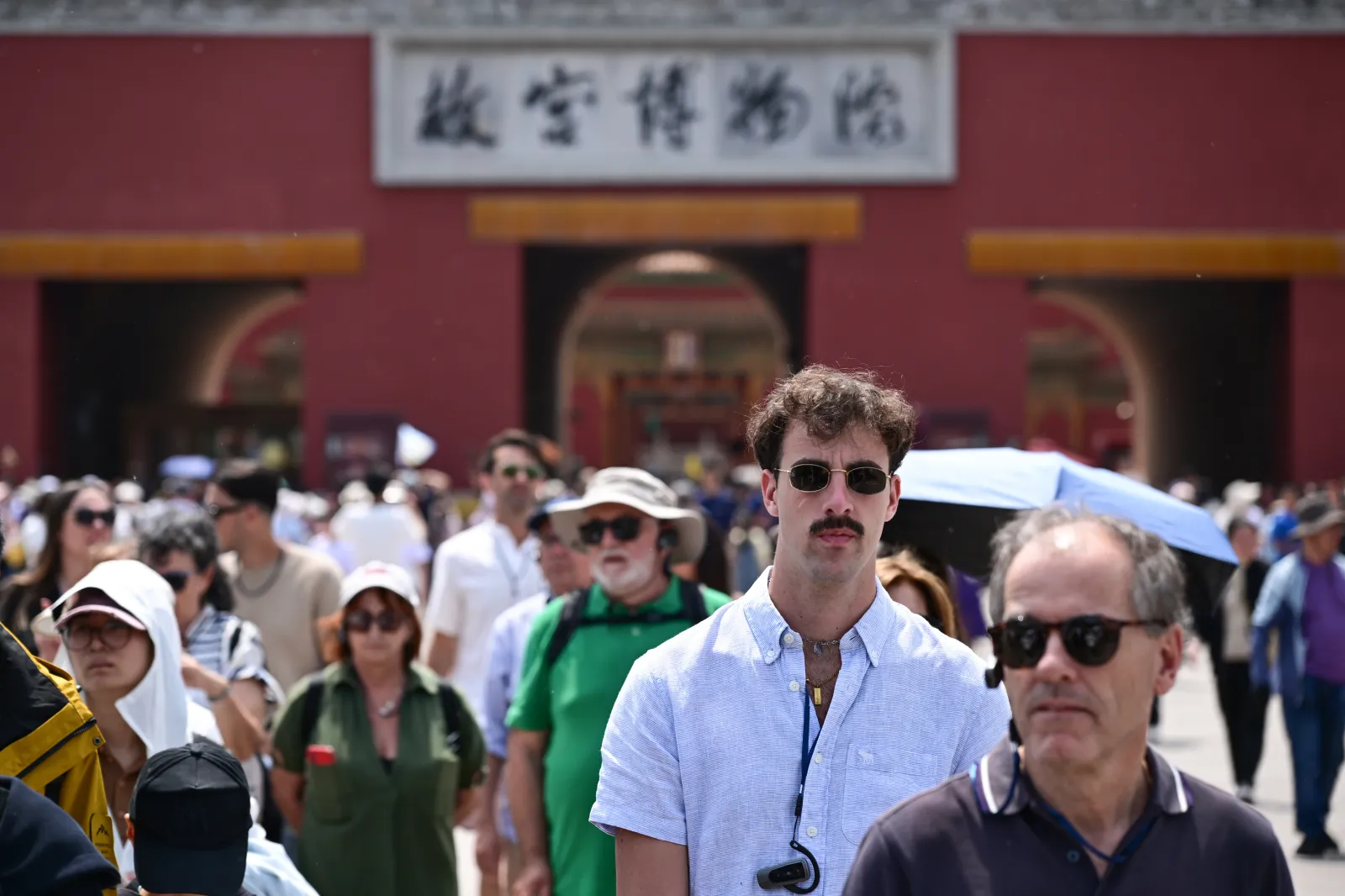
Among the more unexpected manifestations of China’s growing soft power reach has been the emergence of social media trends glorifying China and Chinese lifestyle, often referred to as “Becoming Chinese” or “Chinamaxxing.”
“Both the ‘Becoming Chinese’ trend that emerged at the end of last year and ‘Chinamaxxing’ this year reflect the growing eagerness of our two peoples to reach out to one another,” Xie said. “President Xi Jinping pointed out that the hope of the China-U.S. relationship lies in the people, its foundation is in our societies, its future depends on the youth, and its vitality comes from exchanges at subnational levels.”
Xie traced the “Chinamaxxing” phenomenon back more than a millennium, noting how envoys, caravans and scholars once gathered in the Tang dynasty capital of Chang’an. Today, he tied resurgent fascination with Chinese culture to a sign of the “unstoppable” desire among U.S. and Chinese citizens to engage with one another.
Such interest in building closer ties, Xie said, is also demonstrated in the fact that the “50,000 in five years” plan initiative, announced by Xi in 2023 to invite tens of thousands of young U.S. nationals on exchange and study programs, “has been completed and exceeded its targets in less than three years.”
Competition Versus Confrontation
Soft power is one of many areas in which Washington and Beijing are engaged in competition.
The two powers are on the cutting edge of the AI revolution, which has seen both the U.S. and China pioneer in increasingly sophisticated models. Xie said it was “only natural” for the two nations to compete in this field but argued that they “should engage in a race to the top, put equal emphasis on development and security, check brakes before setting off, and live up to our responsibilities as major countries through cooperation.”
“The world does not want to see an ‘Iron Curtain’ in AI, nor attempts at technological enclosure, let alone a Star Wars-style rivalry in AI,” Xie said. “China-U.S. coordination on AI bears on the future of both our countries and the entire humanity.”
He also saw greater room for cooperation on trade. After several rounds of tariff wars launched throughout Trump’s first and current administrations, the two sides settled on their latest deal last year, though Xie argued “it is still far from enough” and expressed hope “the U.S. side will move further ahead, and completely remove the unilateral tariffs and other restrictive measures.”
Given the scope and magnitude of issues enmeshed in the U.S.-China relationship, Xie addressed concerns regarding the two countries’ capacity to balance their competition in a way that avoids confrontation. At the core of these concerns is the issue of Taiwan, a self-ruling island claimed by China but supported politically and militarily by the U.S.
Xie reiterated China’s long-held stance on the matter, and offered a hypothetical comparison to convey his government’s narrative.
“Just imagine: if a foreign country sold weapons to a U.S. state seeking ‘independence,’ and even sent a leader to visit the state to show support regardless of the U.S. federal government’s strong opposition, could the American people accept it? President Abraham Lincoln stated that ‘A house divided against itself cannot stand,’ and chose to fight to keep the country united,” Xie said.
“I believe the American people, who faced the danger of division and had a Civil War in history, can understand China’s will and determination to safeguard national unity,” he added.
Trump has a history of defying past U.S. policy on Taiwan, with which Washington broke off official relations in 1979 in order to pursue formal ties with Beijing.
Following his first election in 2016, he accepted a call from then-Taiwan President Tsai Ing-wen upon and went on to openly question the U.S.’ One-China policy. He has also expanded political contacts and green-lit larger weapons deals for Taipei, including an $11 billion package in December that marked the largest of its kind for the island.
Xie called on Washington “to commit to the one-China principle and the three Sino-U.S. Joint Communiqués with concrete actions, make the right choice as early as possible, fundamentally remove the biggest obstacle to China-U.S. relations, which is the Taiwan question, a burden that risks dragging our two countries into confrontation and conflict, and open up broader room for developing bilateral ties.”
At the same time, Xie said China would “never shy away” from constructive competition with the U.S. Should the two powers manage to steer away from “a zero-sum boxing match” and toward “a track-and-field race toward mutual excellence,” he argued it would be to the benefit of all humanity.
“Let our two countries compete to offer more public goods to the world, to better help developing nations reduce and eliminate poverty, and to contribute more to the sustained and inclusive development of the global economy,” Xie said. “This is the kind of competition all parties wish to see.”
