
Putin Visits China’s Xi Days After Trump Summit
Russian leader Vladimir Putin hailed his close personal ties with Chinese counterpart Xi Jinping on Wednesday as the two kicked off a day of talks in Beijing, hot on the heels of President Donald Trump’s own visit just a few days ago.
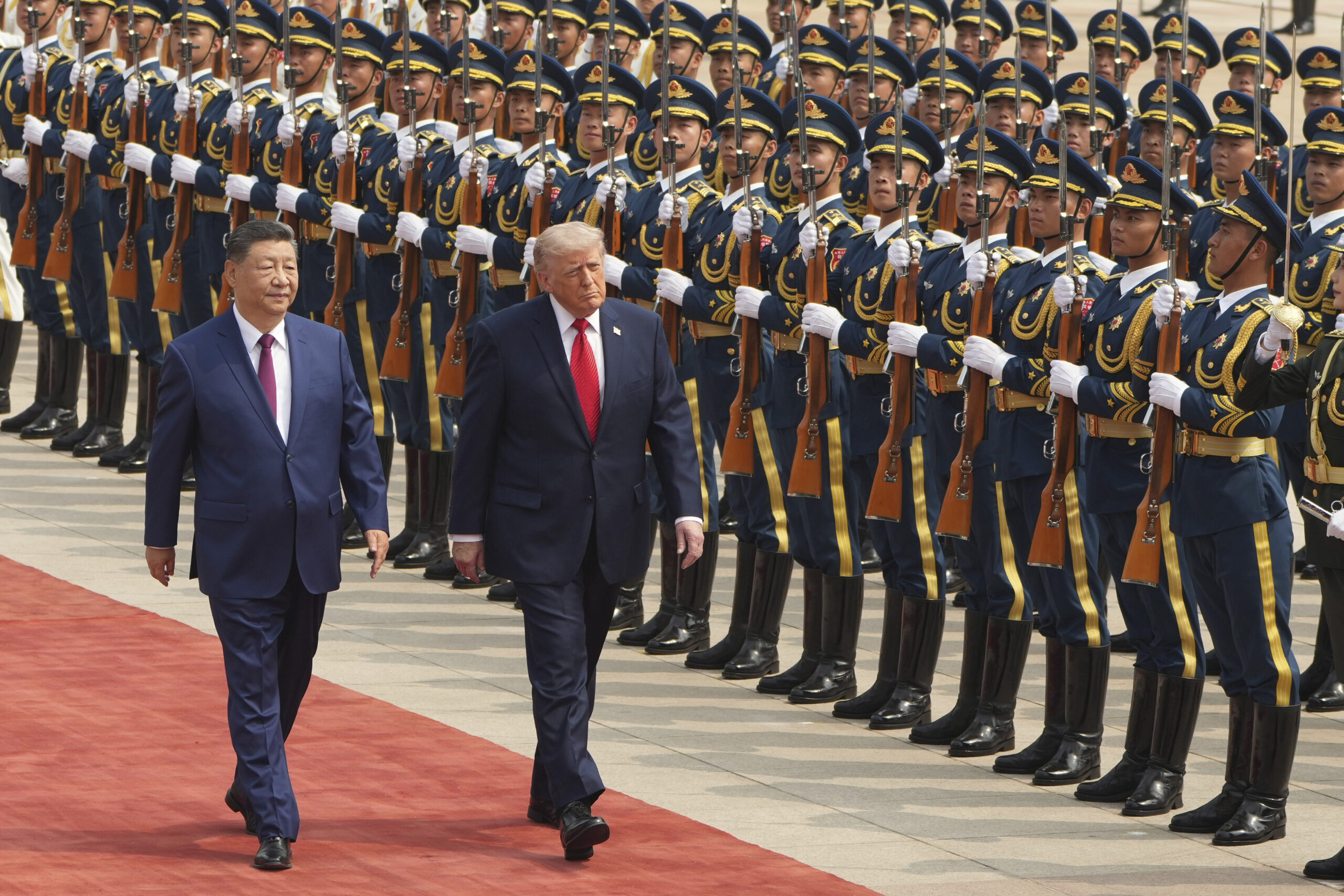
Putin gave Xi a warm greeting at the Great Hall of the People, which also hosted Xi’s summit with Trump last Thursday. And like in last week’s talks, the host was showered with praise for his friendship, leadership and for China’s growing influence on the global stage.
Their deepening economic ties were at the top of the agenda. China became Russia’s top trading partner and the largest buyer of its oil and gas after the Ukraine war began, and Russian energy flows to China have increased since the U.S.-Israeli attacks on Iran all but cut off its Middle East supplies.
But China now has at least one other option and may be reconsidering some of its reliance on Russian fossil fuels, according to Trump, who said Xi had agreed to buy oil and gas from the United States too, in a move that could further erode Putin’s bargaining power as Russia’s trade with China begins to tilt heavily in the latter’s favor. Beijing has not confirmed the possible purchases of American product.
Putin told his “dear friend” Xi that Russia would continue to be “a reliable supplier of resources” amid war in the Middle East.
Xi, in his opening remarks, repeated his calls for an early end to Iran war to “help reduce disruptions to energy supply stability.”
Putin’s 25th visit to China in more than two decades as Russian leader comes at a critical time as the Ukraine war enters its fifth year.
For Xi, Putin’s visit so soon after Trump will serve as further evidence that, at a time of great turbulence, the world’s center of gravity now is in Beijing.
Center of ‘Global Diplomacy’
Chinese state media and social media users are hailing the latest visit by Putin as proof of Beijing’s central role in international affairs.
Chinese state newspaper the Global Times trumpeted that the two high-profile trips showed Beijing to be “focal point of global diplomacy.”
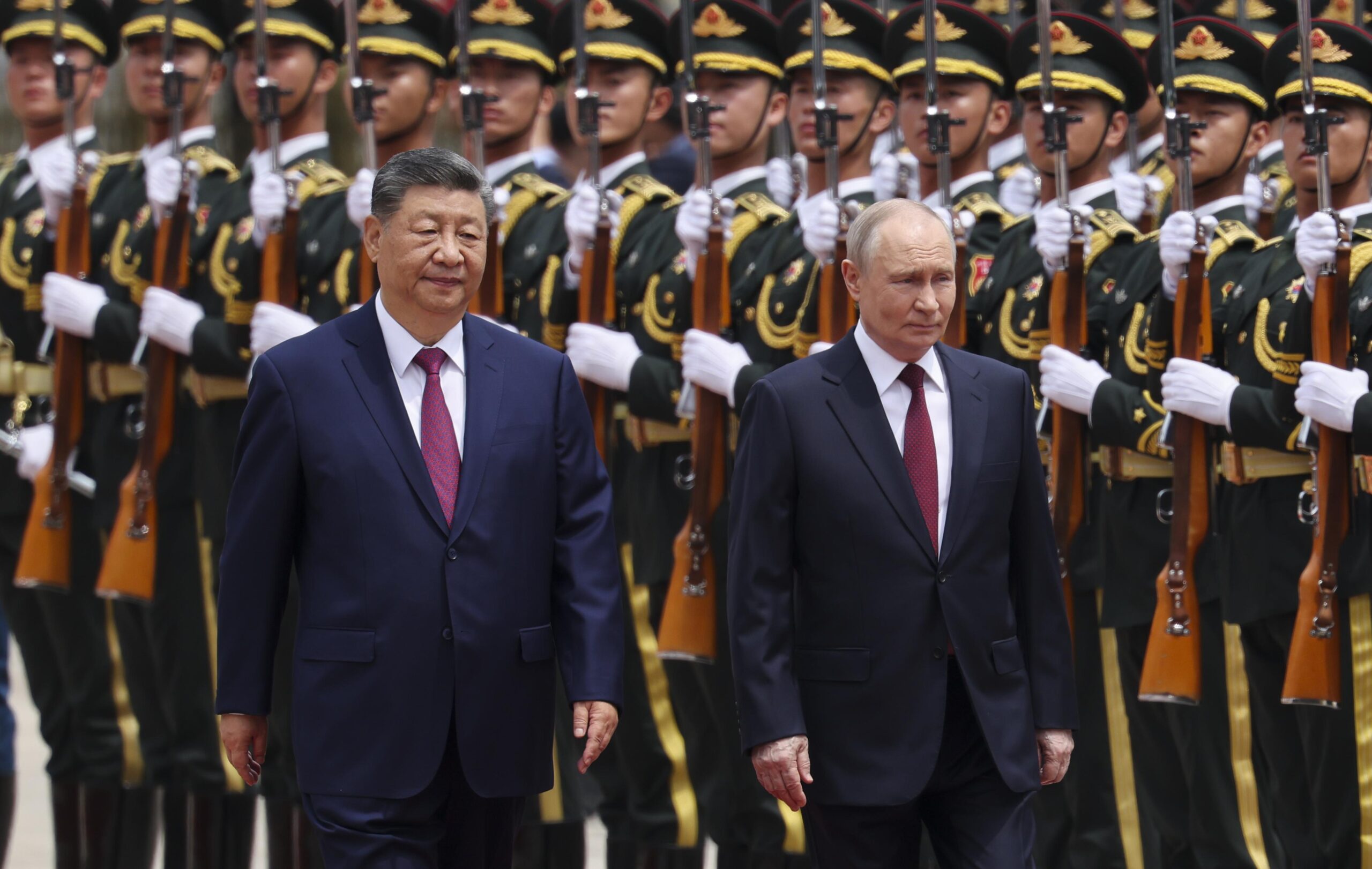
Relations between the two countries have reached an “unprecedentedly high level” and both sides “are actively expanding their contacts in politics, the economy, and defense,” Putin said in a video message to the Chinese public recorded ahead of his departure from Moscow.
China-Russia ties have deepened since both countries announced a “no-limits partnership” on the eve of the Ukraine war. Since then, they have expanded joint military drills in the Pacific. And while China has called for a negotiated peace deal in Ukraine, it has repeated the Kremlin’s narrative faulting the expansion of NATO membership for the conflict.
The two countries have also aligned their messaging in their calls for a more stable alternative to the U.S.‑led global order.
The political symbolism of Beijing hosting both Trump and Putin within one week highlighted China’s emergence as a central hub of global diplomacy and reinforced Moscow’s view of China as the key stabilizing pole in an evolving multipolar order.
Moscow has leaned increasingly heavily on Beijing, which provided an economic lifeline to weather the international sanctions meant to hobble Russia’s economy over the invasion.
Bilateral trade hit record highs in 2023 and 2024 and remained strong last year, totaling $228 billion—a more than 60 percent increase since 2021.
Much of that growth has been driven by China’s purchases of discounted Russian oil and natural gas, which have dominated Russia’s exports to China since the Ukraine invasion. Meanwhile, Chinese firms have ramped up exports of electronics, machinery and other dual‑use goods that U.S. and European officials say are supporting Russia’s defense industrial base, though Beijing has denied providing military support and says it does not export weapons to either side.
Russia’s dependence on its neighbor has raised concerns among some Putin allies that Russia has been relegated to the role of a junior partner.
Xi’s comments suggested he looked forward to hosting his “old friend” Putin, praising the countries’ “profound and lasting friendship” that “will not change,” as well as their “sense of responsibility as major countries,” state media outlet Xinhua reported.
How China Reacted Online
Putin’s visit became a top trending topic on Chinese social media on Tuesday, racking up more than 250 million views on the social media platform Weibo the evening ahead of the leader’s arrival.
Chinese social media operates under strict state control, with content subject to censorship and amplification by authorities, meaning trending topics can reflect both genuine public interest and official messaging priorities.
The comments section was filled with messages of “welcome” and “win-win cooperation”—common themes in Chinese government diplomatic messaging.
“[China and Russia] working together to maintain overall stability,” said one much-liked comment. “The friendship between China and Russia will last forever; we welcome President Putin’s visit to China,” said another.
Putin’s trip is the latest in a string of visits to Beijing by international leaders this year. Those included British Prime Minister Keir Starmer and Canadian Prime Minister Mark Carney, all of whom traveled to China for the first time in eight years as they sought warmer ties and trade deals amid strains in U.S. alliances triggered by Trump’s global tariffs.
The Global Times said: “The tightly sequenced visits have sparked widespread attention, with analysts noting that it is extremely rare in the post-Cold War era for a country to host the leaders of the U.S. and Russia back-to-back within a week.”
A 23-year-old student from China’s Shanxi province, identified by the last name Zhang, echoed this view. She told Reuters: “Previously, we were a developing country, and the global structure used to be one superpower with multiple major powers. But as our country has gradually developed, they have come to realize that China could potentially pose a challenge to them. That’s why they’re visiting China—to learn more about us and, at the same time, seek cooperative relationships.”
