
Tech-savvy preschool teachers more willing to bring GenAI into classrooms
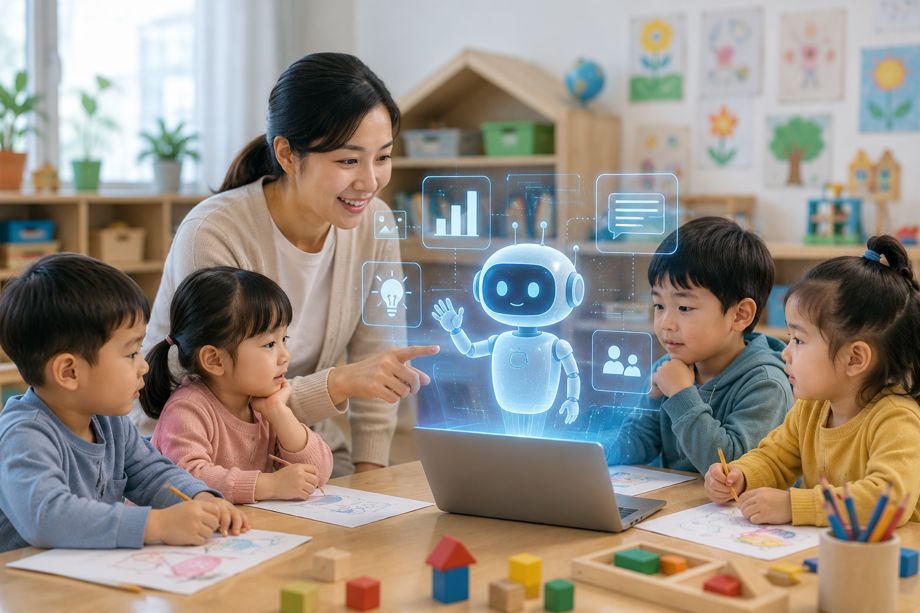
New research has found that preschool teachers are more likely to use generative artificial intelligence, genAI, when they see clear gains in teaching performance, feel support from colleagues and school leaders, and have confidence in their own digital skills, while concerns over data safety and unreliable content remain a major barrier.
The study examines how in-service preschool teachers in China respond to GenAI tools in early childhood education, a setting where technology adoption carries both instructional promise and heightened responsibility because young children require careful protection, age-appropriate learning support and close teacher oversight.
Titled Preschool Teachers’ Intentions to Use GenAI: Extending UTAUT, the study was published in the journal Behavioral Sciences.
Teachers see GenAI as a tool for faster planning and stronger classroom ideas
While GenAI has been widely discussed in higher education and secondary schooling, its use in early childhood education remains less explored. The authors argue that this gap matters because preschool teaching is not only about delivering content. It involves play-based learning, emotional development, social interaction and holistic growth.
GenAI can help teachers prepare lesson plans, generate classroom materials, draft parent communication, design activities and support personalized learning. For teachers facing heavy workloads, the strongest attraction appears to be practical efficiency. Performance expectancy, meaning the belief that a tool will improve work results, was positively linked to teachers’ intention to use GenAI.
Teachers were more willing to adopt GenAI when they believed it could save time, improve productivity and support better teaching or research performance. The authors report that performance expectancy had a significant positive association with behavioral intention.
Teachers described GenAI as useful for lesson preparation, activity design, storytelling materials and organizing research ideas. The broader message is that preschool teachers are not adopting GenAI because it is new. They are more likely to adopt it when it solves everyday work problems.
According to the study, professional development programs that focus only on abstract AI literacy may have limited impact. Teachers are more likely to respond to hands-on demonstrations showing how GenAI can help create age-appropriate lesson plans, classroom prompts, parent notices and creative learning materials. The study suggests that clear evidence of classroom value is more persuasive than general encouragement to keep up with technology.
Peer pressure, leadership support and digital confidence shape adoption
The study extends the Unified Theory of Acceptance and Use of Technology model by adding two factors considered especially relevant to preschool education: perceived risks and tech-savviness. The final model examined performance expectancy, effort expectancy, social influence, facilitating conditions, perceived risks, tech-savviness and behavioral intention.
The researchers recruited 434 preschool teachers for a three-day in-person GenAI workshop and retained 399 valid questionnaires after data cleaning. The workshop introduced core GenAI concepts, educational uses, ethical concerns and hands-on practice with Chinese GenAI tools including DeepSeek, Doubao and Tencent Yuanbao. The authors also conducted 15 follow-up interviews with teachers selected across low, medium and high intention groups.
Social influence emerged as another important driver. Teachers were more willing to use GenAI when colleagues, peers or kindergarten administrators encouraged its use. In school environments, adoption does not happen in isolation. Teachers often look to peers, leaders and institutional norms when deciding whether a new tool is professionally acceptable.
The finding is particularly important for kindergartens. The study indicates that principals and early adopters can play a major role in shaping the adoption climate. When school leaders encourage responsible experimentation and when teachers see colleagues using GenAI successfully, resistance may fall. GenAI adoption, in this sense, is not only a matter of personal preference. It is also shaped by workplace culture.
Tech-savviness was the strongest positive predictor in the model. Teachers who felt confident using new digital tools were more likely to intend to use GenAI. This shows that general digital comfort matters, even when GenAI tools are designed with simple conversational interfaces. Teachers who know how to test prompts, compare outputs, adjust instructions and troubleshoot problems may experience the technology as empowering rather than frustrating.
The interviews showed a clear divide between confident users and hesitant users. Teachers who regularly explored new software were more eager to use GenAI, while those who struggled to phrase prompts or obtain useful outputs were more likely to feel discouraged. The finding points to a practical need for ongoing support, not one-time training. Teachers need chances to practice with real classroom tasks, learn prompt-writing techniques, compare outputs and discuss quality standards with peers.
Effort expectancy, or perceived ease of use, was not significantly associated with teachers’ intention to use GenAI. Facilitating conditions, such as access to resources and technical support, also showed no significant association. The authors caution that these findings should not be read as proof that ease of use and support do not matter. The sample included teachers who had already joined a GenAI workshop, and many had prior AI or digital training. This may have reduced variation in responses.
Many teachers said basic access to smartphones, internet connections and GenAI platforms was already available. Others said they were willing to spend time learning the tools if the benefits were strong enough. In a well-resourced environment, ease and infrastructure may become background conditions rather than decisive factors.
Privacy, unreliable content and child safety remain central barriers
Despite broad interest in GenAI’s usefulness, perceived risk had a negative association with teachers’ intention to use the technology. The concern is especially serious in preschool education because teachers work with young children and must protect their privacy, emotional well-being and developmental needs.
The risks identified in the study include inaccurate content, inappropriate material, data security concerns and uncertainty over whether AI-generated outputs are professionally suitable for young children. Teachers were particularly cautious about entering children’s personal information into third-party platforms. They were also concerned that AI-generated teaching content might contain errors, bias or unsuitable details that would require careful checking.
The study suggests that adoption cannot rely only on enthusiasm, peer support or productivity gains. Kindergartens and education authorities need clear rules for safe use. These may include restrictions on uploading children’s personal data, guidance on verifying AI-generated content, standards for age-appropriate materials and procedures for teacher review before classroom use.
The authors identify several limitations, including possible self-selection bias, a cross-sectional design, reliance on self-reported data, high correlations between some constructs and possible common method bias. The study also notes that the sample was overwhelmingly female, reflecting China’s preschool workforce, and that most participants had relatively strong exposure to training or institutional support.
The next phase of research will need broader, longitudinal and cross-cultural evidence to test whether these patterns hold beyond trained teachers in China’s preschool system.
