
Football’s oldest burden returns: Can England finally end six decades of World Cup heartbreak?
There is a number that haunts English football till date. A number like no other. Not a jersey number, not a scoreline, just a year. 1966. The only and the last time England held the World Cup, at home, in a world that felt like it belonged to them.
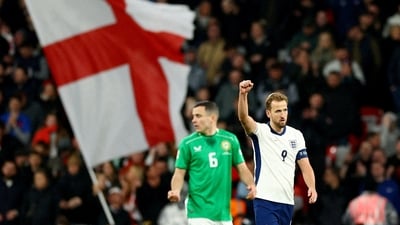
In years that followed, England came closest to the crown on two occasions. In 1990, Bobby Robson’s men made it to the semifinals for the first time at a World Cup since that win in 1966. But West Germany halted their run, before an error from goalkeeper Peter Shilton against Italy in the third-place playoff saw England finish fourth. 2018 witnessed a similar. ‘It’s coming home’ echoed the streets of Russia as Harry Kane-led England marched into semis, only to be stunned by Croatia. They eventually finished fourth, again.
Sixty years since that historic win at Wembley, Thomas Tuchel‘s Three Lions board a plane to North America carrying the full weight of that half-century of heartbreak, armed with arguably their most gifted generation since — and yet, still, with questions that refuse to go away.
England’s qualification road
That part was smooth sailing.
England became the first European side to qualify for the 2026 World Cup. Their dominance was underlined by the fact that qualification was secured with two games to spare, built on the back of an eight-match winning streak in which they did not concede a single goal.
The glow of qualification, however, quickly faded under closer scrutiny.
England’s route was hardly the most demanding, and when Tuchel’s side faced stronger opposition in recent friendlies, the results were sobering. Defeats to Senegal and Japan drew audible boos from English supporters expecting considerably more.
The squad: Talent with holes
England’s World Cup squad announcement immediately sparked controversy.
Cole Palmer, arguably the most inventive English footballer of the last two seasons, was shockingly omitted. So too was Phil Foden, despite both enduring underwhelming club campaigns. Real Madrid’s Trent Alexander-Arnold did not make the cut either, a less surprising omission given he had not featured for England since the previous summer. Neither did Harry Maguire, who later admitted on social media that he was “shocked and gutted” by the decision.
In their place came selections that puzzled even the most patient observers. Ivan Toney, now playing for Al-Ahli in Saudi Arabia and having accumulated just seven minutes of international football since Euro 2024, received a call-up. So did 35-year-old Jordan Henderson, along with Tottenham’s Djed Spence and Bayer Leverkusen defender Jarell Quansah. Nine members of the travelling party have never appeared at a major international tournament.
Tuchel defended his decisions, though not entirely convincingly.
“From day one, we were clear that we are trying to select and build the best possible team, which is not necessarily to select and collect the 26 most talented players. Teams win championships. It’s as simple as that. Everything I know and hear about international football is that it is about the team and the chemistry.”
The omissions of Palmer and Foden suggest Tuchel values tactical structure over individual flair.
His England tenure has also been marked by tactical experimentation, a false nine here, twin No. 10s there, without any system consistently clicking.
Yet the German will arrive in North America determined to silence the criticism and end England’s decades-long wait for World Cup glory.
Key players
Harry Kane remains the cornerstone of everything England do.
At 33, he has just completed arguably the finest goalscoring season of his career, scoring 61 goals in 51 appearances for Bayern Munich. England have not always managed to maximise Kane’s influence despite his Golden Boot-winning exploits at the 2018 World Cup, but if he arrives fresh and fit, the Three Lions will possess one of the most lethal finishers in world football.
Jude Bellingham is perhaps England’s most intriguing subplot. The Real Madrid midfielder has the talent to alter the course of a tournament single-handedly, but an injury-disrupted season means he may not automatically start games.
Aston Villa’s Morgan Rogers, in outstanding domestic form and clearly trusted by Tuchel, could begin ahead of him. The prospect of Bellingham being used as an impact substitute is either inspired management or a waste of England’s most gifted creative talent.
Nico O’Reilly could finally offer a solution to England’s long-standing left-back problem. The 21-year-old Manchester City youngster heads to the World Cup after scoring seven league goals this season and adding two more in the League Cup final.
Squad Rating: 7.8/10
Goalkeeping is dependable, the defensive unit solid when the back four settles, and the midfield remains organised and industrious, with Declan Rice and Elliot Anderson providing the engine room.
Without Palmer or Foden, however, creativity relies more on individuals than on a clearly defined system.
The attack, when Kane is firing and Bukayo Saka and Marcus Rashford are on song, is formidable.
The biggest uncertainty remains the manager. For all of Tuchel’s pedigree, England are still waiting to see whether his ideas can translate into genuine tournament success.
How far can they go?
England possess the tools to challenge for the World Cup. They have a proven goalscorer in Kane, defensive stability and enough depth to trouble any opponent.
The challenge, as always with England, is converting potential into performance when the margins become razor-thin.
Prediction: Quarter-finals at minimum, semi-finals if Kane delivers and Bellingham hits top form early.
Is it coming home? Perhaps not. But for the first time in a long while, England arrive at a World Cup with enough talent to make the question feel genuine rather than nostalgic.
