
Trump bans WeChat, TikTok, tensions in Beijing By Reuters
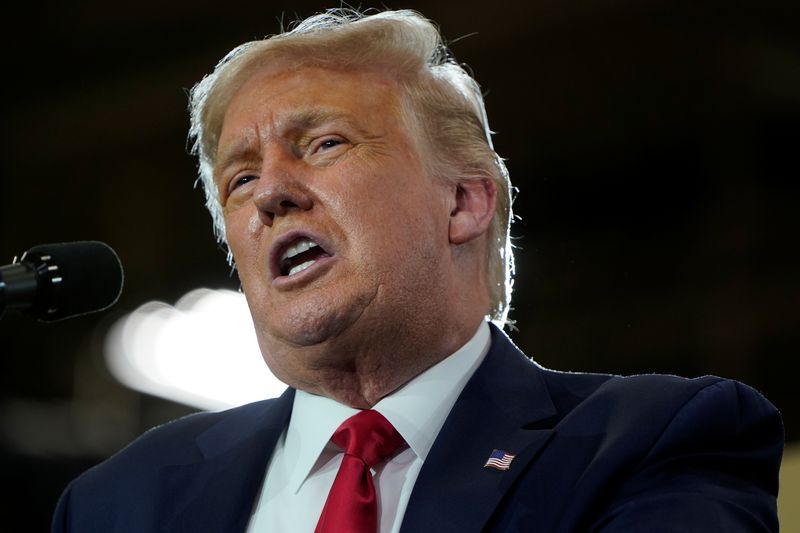
© Computers. US President Donald Trump speaks at a Whirlpool Corporation washing machine factory in Clyde, Ohio
2/2
By David Shepardson and Alexandra Alper
(Reuters) – US President Donald Trump announces bans banning US transactions with Chinese owners of WeChat messaging app and TikTok video sharing, raising a high-profile confrontation to bet on Beijing in the future of the tech industry.
Executive orders were announced on Thursday and effective 45 days after the Trump administration this week flagged increased efforts to clean up “unreliable”
; Chinese apps from digital networks. US, calling Tencent Holdings (OTC 🙂 Ltd’s (HK 🙂 WeChat and popular TikTok “the popular WeChat and Bytedance” significant threat. “
China strongly opposes executive orders and will defend the legitimate rights and interests of Chinese businesses, foreign spokesman Wang Wenbin said in a media briefing on Friday.
TikTok has come under fire from U.S. lawmakers about national security concerns surrounding data collection as mistrust grows between Washington and Beijing. Reuters reported on Sunday that Trump provided Microsoft Corp (Or 🙂 45 days to complete the purchase of TikTok US operation.
The ban on US transactions with Tencent, one of the largest internet companies in the world, illustrates further fracturing of the global internet and the breakdown of long-standing relations between tech industries in the United States and China.
“This is the rupture in the digital world between the US and China,” said James Lewis, a technology expert with Washington-based think tank based on Strategic and International Studies. “Absolutely, China will be rewarded.”
On Wednesday, US Secretary of State Mike Pompeo expanded a program called the “Clean Network” to prevent various Chinese apps and telecoms firms from accessing sensitive information to citizens and US business.
Trump’s new orders appear to be linked to Pompeo’s announcement, Lewis said.
“We are reviewing the executive order to get a full understanding,” a Tencent spokesman said.
ByteDance declined to comment.
FRIENDLY TARGET
WeChat has been downloaded relatively small 19 million times in the United States, showing data from Sensor Tower. In China, however, the app is largely as a medium for services that differ as games and payments. It is also a common platform to communicate with individuals and businesses outside of China.
US social media and messaging services such as Facebook Inc WhatsApp (O 🙂 and Messenger are blocked in China, where a “good firewall” prevents citizens from freely accessing the world, and where online communication is regularly monitored and censored.
Washington’s concerns about China’s tech industry have only recently focused on telecom equipment vendors Huawei Technologies Co Ltd. While the relations came from a host of economic and human rights issues, it punished many other tech companies.
Tencent is the biggest target. It was the second most important Asian company then Alibaba Group Holding Ltd (N 🙂 with a huge market capitalization of $ 686 billion, and is among the largest social media and video game companies in the world. It opened a California gaming studio earlier this summer and owns minority stakes in many gaming and internet firms around the world, including the US messaging operator Snap Inc (N :).
Trump’s order sent Asian stock markets lower on Friday, with Tencent shares up 10.1% before recovering some of its afternoon trading losses.
The yuan , a barometer of Sino-US relations, posted the steep collapse since the United States expelled China from the Houston consulate a little over two weeks ago.
SEEING POWER
Trump issued orders under the International Emergency Economic Powers Act, a law that provides the executive power to prevent U.S. companies or citizens from trading or conducting financial transactions in penalties.
Commercial Secretary Wilbur Ross will recognize the transactions covered after the orders take effect in mid-September.
Tensions have been raging between the two powers for months, with the issue of the United States handling China over the novel coronavirus uprising and moving to block Hong Kong freedoms. The growing aggressive posture towards Beijing comes as Trump bids for re-election in November.
Trump said this week that he would support Microsoft’s efforts to buy the US operation of TikTok if the US government has a “large share” of the proceeds. However, he said he would ban the popular app on September 15, even though some Republicans raised concerns about the potential political collapse.
The app could be used for disinformation campaigns that benefit the Chinese Communist Party, and the United States “should take aggressive action against TikTok owners to protect our national security,” Trump told a order.
On the other hand, Trump said WeChat “automatically obtains extensive information from its users. This data collection threatens to allow the Chinese Communist Party access to personal and proprietary information American. “
The United States is not alone in its concern about Chinese internet applications: WeChat and TikTok are among the 59 most Chinese apps banned by India in June for threatening “sovereignty and integrity. “.
WeChat’s command effectively bans the app in the United States by prohibiting “to the extent permitted by applicable law, any transaction related to WeChat by any person, or about any property, covered by jurisdiction of the United States. including Tencent Holdings Ltd. “
It is unclear whether the penalty will affect Tencent’s other handling of the country.
TEST
Meanwhile, WeChat users in the United States are quickly reviewing alternatives.
“Banning WeChat violates American liberal principles,” Jeason Ma, a 33-year-old in Los Angeles who obtained U.S. citizenship in November, told Reuters. “Most of our family and friends are in China. It will cause significant inconvenience to our lives.”
Ma shares her account information for WhatsApp and messaging rival Line Corp (T 🙂 with friends and family, fearing she may lose access to WeChat.
The law “calls TikTok a national security threat,” said Derek Scissors, a Sino-US economic relations expert at the American Enterprise Institute’s think tank. “Either we have not missed the threat in three years or it has become another but we are waiting for 45 days.”
