
[BizSights] Explaining the ‘KPop Demon Hunters’ phenom
What happens when you mix a unique Asian story, great storytelling, top-notch animation, catchy K-pop music, an international fandom, global distribution via Netflix, and word of mouth and social media promotion?
You get a new phenomenon — KPop Demon Hunters — a film about an all-girl K-pop group, Huntr/X, that protects the world from demons, including an all-male K-pop band, Saja Boys, that wants to rule the earth.
![[BizSights] Explaining the ‘KPop Demon Hunters’ phenom](https://www.socialmediaasia.com/wp-content/uploads/sddefault-71.jpg)
Although the mainly English animated musical film is produced by Japan’s Sony Pictures Animation (part of the Sony Group) and distributed by American streaming giant Netflix, it is, in its essence, Korean content or K-content.
The one-hour, 40-minute film is taking the world by storm after premiering on June 20 exclusively on Netflix.
It’s been the top movie on Netflix for the past 9 weeks, including in the Philippines. It’s now the most popular Netflix animated film of all time and is in the Top 10 in over 190 countries where the platform is available.
Netflix said on Wednesday, August 27, that KPop Demon Hunters is now the platform’s “most popular film of all time on the Most Popular English Films list with 236 million total views.” It had overtaken the Gal Gadot-headlined 2021 action-comedy film, Red Notice, which had 230.9 million views.
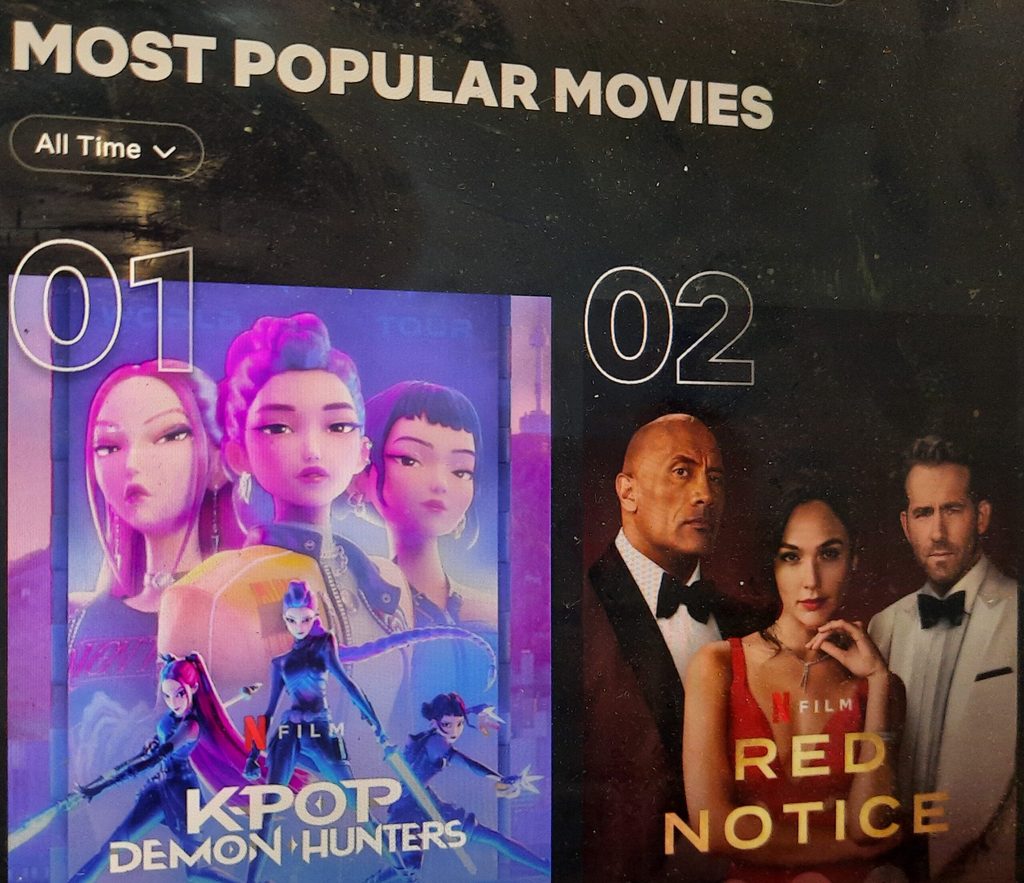
No doubt about it, KPop Demon Hunters is the new K-content phenomenon after Netflix’s Squid Game. It’s also the next biggest K-pop music content since the 2024 global smash hit song “APT.,” a collaboration between Filipino-American Bruno Mars and BLACKPINK’s Rose. Their official music video has reached 1.9 billion views on YouTube.
How did the creators of KPop Demon Hunters do it?
1. Music that clicks with the young generation
Great songwriting, catchy melodies, and lyrics that appeal to a broad young audience.
You can watch a brief compilation of the hit songs in KPop Demon Hunters in the video below:
![[BizSights] Explaining the ‘KPop Demon Hunters’ phenom](https://www.socialmediaasia.com/wp-content/uploads/sddefault-72.jpg)
Unlike many of the Disney animated musical films where the songs appeal to pre-teens, the songs in KPop Demon Hunters capture a wider youth demographic that includes even those in high school and perhaps even in college.
![[BizSights] Explaining the ‘KPop Demon Hunters’ phenom](https://www.socialmediaasia.com/wp-content/uploads/sddefault-73.jpg)
The catchy “Soda Pop” is popular among young kids, around 4 to teens. Songs with deeper meanings, such as “Free” and “Takedown,” appeal to adolescents and the youth.
![[BizSights] Explaining the ‘KPop Demon Hunters’ phenom](https://www.socialmediaasia.com/wp-content/uploads/sddefault-74.jpg)
Even if you haven’t seen the movie, the songs in KPop Demon Hunters can stand alone, a testament to the creativity of the team behind the musical production.
![[BizSights] Explaining the ‘KPop Demon Hunters’ phenom](https://www.socialmediaasia.com/wp-content/uploads/sddefault-75.jpg)
A number of the songs in the soundtrack, such as “Golden” (video above) and “Soda Pop,” are still in the top 10 of various music charts (global and national), including on Billboard Philippines Hot 100.
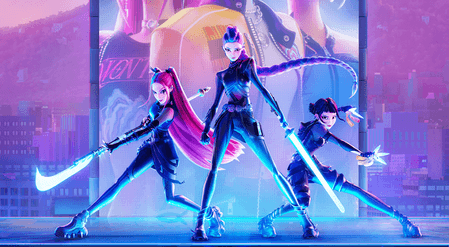
In the US and Canada, the movie — promoted as a “sing-along version” — was shown over the weekend, August 23 and 24, and was likewise a hit. Entertainment business news publication Variety reported it was shown in 1,700 cinemas and topped the box office, earning around $18 million.
I expect Philippine cinema operators to get Sony Animation and Netflix to do the same in our country and make a killing.
2. The role of community: K-pop fandoms
KPop Demon Hunters has resonated with the whole K-pop community worldwide.
Although it’s not a South Korean production, all the K-pop groups, including BTS, have given the film a thumbs-up. Many South Korean migrants in the US and Canada were part of the film.
“K-pop icons are embracing KPop Demon Hunters not just as a movie, but as a global phenomenon, covering its songs, expressing admiration and joining fans worldwide in celebrating the film’s electrifying blend of music, fantasy and star power,” wrote Park Jin-hai in the South Korean English publication Korea Times. “Not just vocal covers, but social media is now flooded with with dance covers from idols and fans alike.”
The Philippines’ very own P-pop group, SB19, has also done a dance cover of the hit song, “Soda Pop.”
@officialsb19 Saja Boys #SB19 ♬ Soda Pop – Saja Boys & Andrew Choi & Neckwav & Danny Chung & Kevin Woo & samUIL Lee & KPop Demon Hunters Cast
How large is the K-pop fandom community?
We can get a gauge of its size from a survey that’s been done by the Korea Foundation and Korea’s Ministry of Foreign Affairs on Hallyu or Korean Wave fans. K-pop fans or the Korean music fans are the biggest Hallyu followers.
A report in South Korea official website Korea.net estimates that the Hallyu community has surpassed 200 million globally. That’s a massive group creating buzz about the movie and its soundtrack.
From only 9.26 million in 2012, the survey found that the number of Hallyu fans reached 225 million in December 2023. The number of Hallyu fan clubs has risen from 757 in 2012 to 1,748 in 2023.
K-pop and K-dramas were cited as the principal drivers of the Korean wave “with 68% of fan clubs focused on K-pop and about 10% on K-dramas.”
Asia and Oceania had the most fans and clubs with 66% or 2 in every 3.
A study by the UNCTAD on K-content published in 2024 said, “Most of the organizations consist of fan clubs such as ARMY (BTS’s global official fan club) and BLINK (BLACKPINK’s official fan club) although there are other cultural communities such as those following Korean drama, food and tourism.”
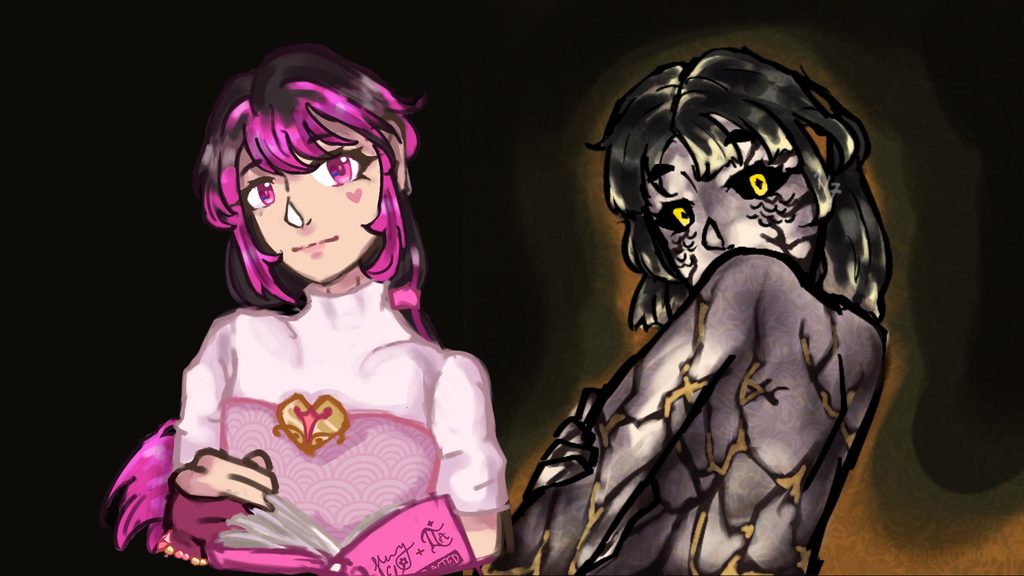
KPop Demon Hunters has also inspired animé communities and groups with many young people posting fan artworks. GenZs and Gen Alphas have also been motivated to create original animé characters after watching the film.
3. Originality and authenticity
I found time to watch KPop Demon Hunters last weekend and what struck me from the film was how even adults can get hooked to the story and songs from the get-go. That’s partly because the story is original and authentically Korean. It is based on Korean folklore and shows many aspects of Korean culture — such as food (gimbap, ramyeon), art (Magpie and Tiger; Maedeup), and traditional clothing (Gat), as well as iconic places in South Korea (Namsan Seoul Tower, Naksan Park, Bukchon Hanok Village).
KPop Demon Hunters co-director, Maggie Kang, a Korean-Canadian, attributed the film’s success partly to its authenticity. Kang, who migrated to Canada at age 5, said at a press conference on August 22 that one of the reasons behind the movie was to let more people around the world know more about Korea.
An insightful quote from Kang was reported by Korea Times: “When we see Korean content made overseas, there are often many inaccuracies. Not just Korean content, but other Asian works, like Mulan, for example. It’s a Chinese story, but the characters are wearing kimono-style clothes, which as an Asian person, feels wrong. I wanted to make a Korean film where the Korean culture and details were accurate. I didn’t do it alone. There were many Koreans on our team who checked everything to make sure there were no mistakes.”
Kang also said that most of her efforts in the film went into “story development,” noting that it took 7 years to complete KPop Demon Hunters.
“The most important thing is crafting the story. If the story lacks a connection, people won’t watch it. From the beginning to end, the story is the most important part,” Kang said at the press conference.
In order to produce authentic K-pop music, Kang and co-director, Chris Appelhans, tapped music producers who’ve worked with K-pop groups for the film’s songs.
Adding to the authenticity, three members of the K-pop group TWICE — Jeongyeon, Jihyo, and Chaeyoung — performed the song, “Takedown.” If you’re not familiar with the group, you can watch them in the video below:
![[BizSights] Explaining the ‘KPop Demon Hunters’ phenom](https://www.socialmediaasia.com/wp-content/uploads/sddefault-76.jpg)
Rappler contributor Bea Gatmaytan recently wrote an analysis of the KPop Demon Hunters soundtrack and compared each of the movie’s original songs to “K-pop hits that share similar moods, aesthetics, or concepts.” You can read her piece below:

4. Connecting with Filipinos
There are also Philippine elements in KPop Demon Hunters that helped make it a big hit in the local scene.
Tony Award-winner Lea Salonga, a K-pop and BTS fan, was tapped as the singing voice for the character Celine, a guardian of the Huntr/X girls. Salonga, the voice of Jasmine in the Disney film Aladdin, has been elated by the honor, despite it being a minor role.
And, what better way to get the movie to resonate with locals than have it translated and dubbed by locals.
Netflix Philippines tapped Hit Productions Incorporated, a leading Philippine audio and video post-production firm, for the Filipino dubbing of KPop Demon Hunters.
The company introduced the Filipino crew who provided voices for the local dubbing via a post last June after the movie was shown on Netflix.
One of the most popular among the dubbed songs is the Tagalog version of the fictional Saja Boys’ “Your Idol,” which already had 1.3 million views as of posting:
![[BizSights] Explaining the ‘KPop Demon Hunters’ phenom](https://www.socialmediaasia.com/wp-content/uploads/sddefault-77.jpg)
Netflix promoted the Filipino dubbing of the song “Golden” this month, Buwan ng Wika. It has logged 2.3 million views on YouTube.
Netflix has poured a lot of money into developing local content, and sees this as one of the factors for the streaming platform’s success worldwide.
Soft power
For Filipino content creators, the main insight from KPop Demon Hunters is to stay true to being original, creative, and authentic. The world is looking for original stories, songs, and new cultures to experience. This movie should inspire our artists and performers to continue producing original Pinoy content.
We should also continue to grow our P-pop community so as to push our own Philippine Wave, although it will take years of creative work and a lot of funding to improve our soft power.
In brand valuation consultancy firm Brand Finance’s Global Soft Power Index 2025 report, the Philippines was a respectable 53rd out of 193 nations on the list. We are the 10th Asian country on the list after China (2nd), Japan (4th), South Korea (12th), Singapore (21st), India (30th), Malaysia (36th), Thailand (39th), Indonesia (45th), Vietnam (52nd), Philippines (53rd).
The latest index, dubbed as “The world’s most comprehensive research study on perceptions of nation brands,” is based on a global survey of over 170,000 respondents in 102 markets conducted in the last four months of 2024. It defines soft power as “a nation’s ability to influence others through attraction and persuasion rather than coercion. This includes the means of culture, business, or diplomacy, rather than military force or economic sanctions.”
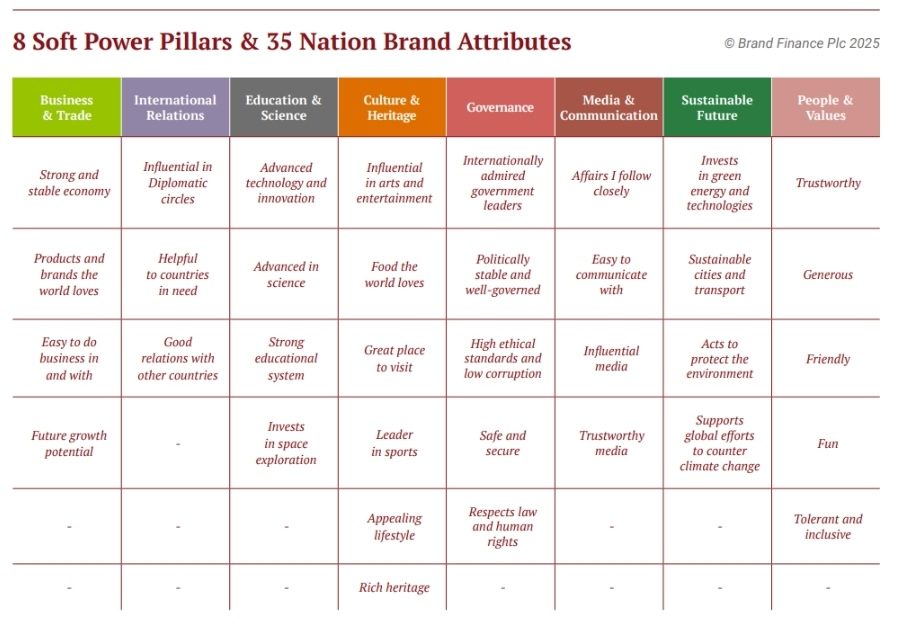
Our highest scores were on familiarity (how well a nation is known) and reputation (how positively a nation is regarded), with lowest scores on education/science and governance. This puts a lot of onus on government to improve our scores on these two factors.
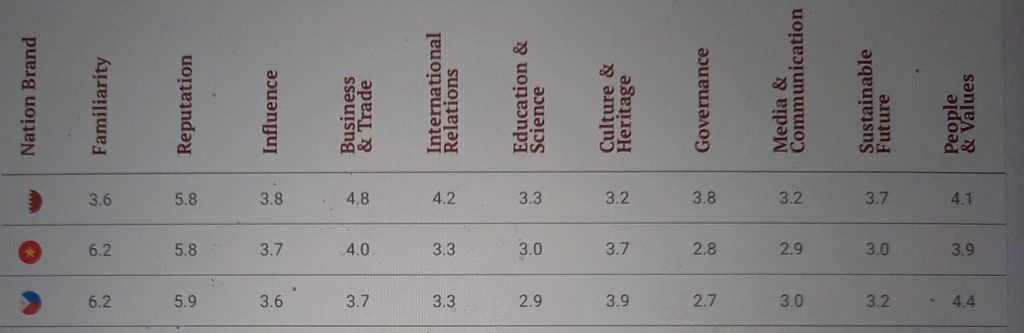
Soft power is now a key goal of most nations as they try to be more competitive amid globalization.
“Nation branding helps audiences, both foreign and domestic, to understand what they stand for and how they are differentiated from other countries. It supports businesses and other organisations that engage internationally,” wrote Dr. Paul Temporal, associate fellow of Saïd Business School, University of Oxford, in the report’s foreword. “Nations that have been intentional about their branding decisions have reaped benefits such as export growth, increased tourism, greater access to global markets and even the reversal of negative perceptions.”
David Haigh, chairman of Brand Finance, put forward the following questions that countries should ask as they try to improve their soft power: “To navigate the complexities of the modern world, leaders must adopt a strategic approach beyond reacting to immediate challenges. This means asking fundamental questions: What do we stand for as a nation? What do our stakeholders — whether they be citizens, investors, or international partners — value most about us? And how can we craft a narrative that resonates with these audiences and equips us to weather the inevitable headwinds of global competition?”
KPop Demon Hunters, the latest expression of what soft power can do, provides insights to some of these questions. – Rappler.com