Pakistani delegation goes to Iran for talks
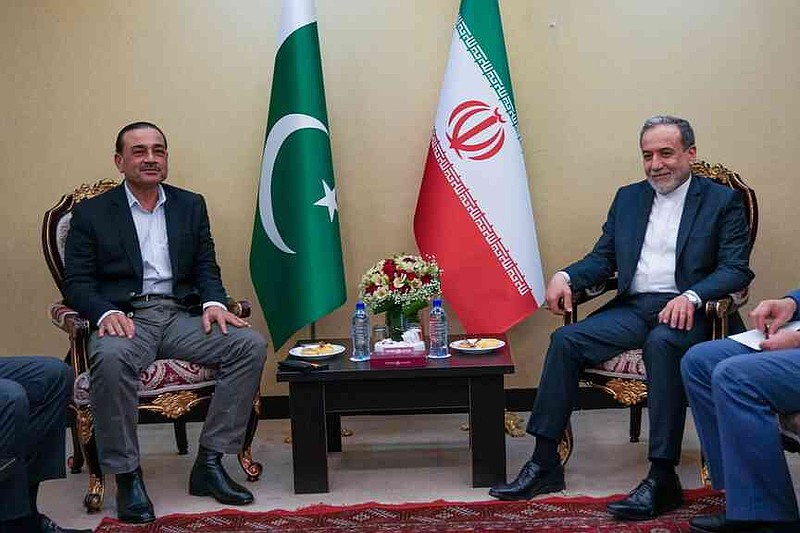
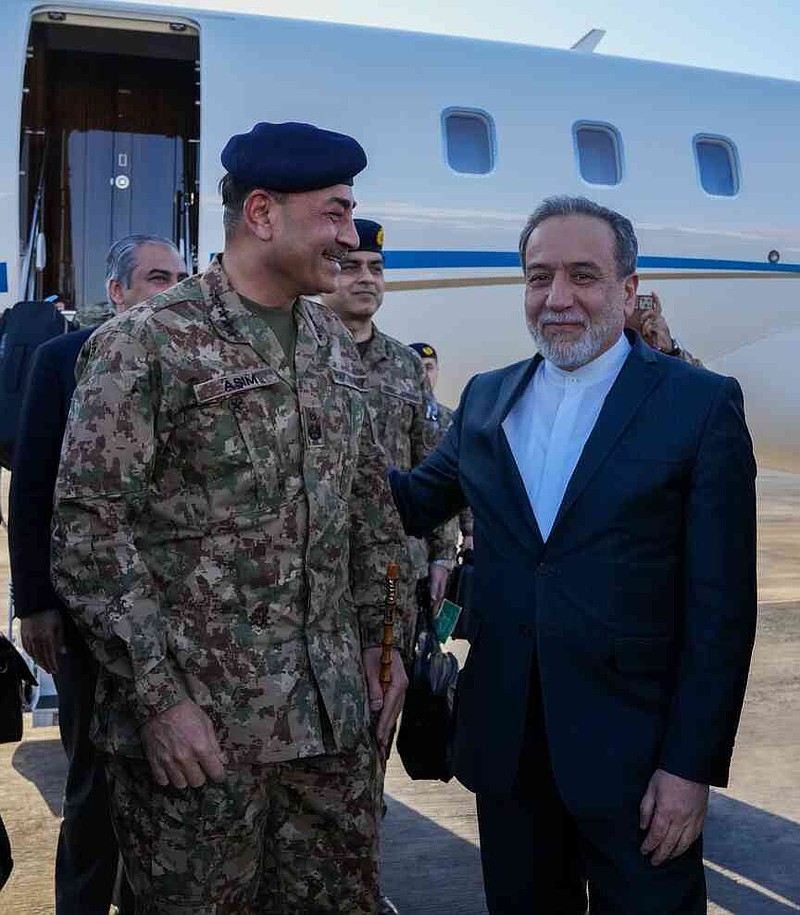
CAIRO — Pakistan’s army chief arrived Wednesday for talks in Tehran in the latest diplomatic move to ease tensions in the Middle East and arrange a second round of negotiations between the United States and Iran after almost seven weeks of war.
The White House said any further talks would likely take place in the Pakistani capital of Islamabad, though no decision had been made on whether to resume negotiations.
Also Wednesday, U.S. officials said the Pentagon is sending thousands of additional troops into the Middle East in the coming days, while considering the possibility of additional strikes or ground operations if a fragile ceasefire does not hold.
The U.S. naval blockade of Iranian ports continued for a third day. And a top official in the Trump administration warned of new economic sanctions on countries doing business with Iran, saying the Islamic Republic would feel the “financial equivalent” of a bombing campaign.
Pakistan has emerged as a key mediator in the conflict after it hosted rare direct talks between the U.S. and Iran in Islamabad, a move authorities said helped narrow differences between the two sides. Mediators are seeking a new round before a ceasefire is set to expire next week.
Even as the U.S. blockade on Iranian ports and renewed Iranian threats strained the ceasefire agreement, regional officials reported progress, telling The Associated Press the United States and Iran had an “in principle agreement” to extend it to allow for more diplomacy. They spoke on condition of anonymity to discuss the matter.
Iran’s foreign minister, Abbas Araghchi, took part in a preliminary meeting with Asim Munir, Pakistan’s army chief of staff, Iranian state media reported. It said talks would continue Thursday.
The Pakistani military said the delegation sent to Iran also included the country’s interior minister and other senior security officials. The group is “part of the ongoing mediation efforts,” the military said, but it gave no details.
Iranian Foreign Ministry spokesman Esmail Baghaei, announcing the incoming Pakistani delegation, said Islamabad “has held discussions with the Americans and has also heard our stances. During this visit the views of both sides are to be discussed in detail.”
THREATS MADE
But even as mediators worked for peace, tensions simmered. The commander of Iran’s joint military command, Ali Abdollahi, threatened to halt trade in the region if the U.S. does not lift its naval blockade.
And a newly appointed military adviser to Iranian Supreme Leader Mojtaba Khamenei said he doesn’t support extending the ceasefire.
Iranian state media quoted Mohsen Rezaei, a former commander in the Iranian Revolutionary Guard, as saying: “Unlike the Americans who are afraid of continuous war, we are fully prepared and familiar with a long war.”
U.S. Treasury Secretary Scott Bessent said the White House has warned countries and private companies “that if you are buying Iranian oil, that if Iranian money is sitting in your banks, we are now willing to apply secondary sanctions.” The move aims to inflict more economic pain on Iran.
The U.S. has sent letters threatening sanctions to financial institutions in China, Hong Kong, Oman and the United Arab Emirates.
White House press secretary Karoline Leavitt said the U.S. had not “formally requested an extension of the ceasefire” with Iran, which is set to expire next Tuesday.
“We feel good about the prospects of a deal,” she said.
Mediators are pushing for a compromise on three main sticking points that derailed direct talks last weekend — Iran’s nuclear program, the Strait of Hormuz and compensation for wartime damages, according to a regional official involved in the mediation efforts.
Baghaei said Iran is open to discussing the type and level of its uranium enrichment, but his country “based on its needs, must be able to continue enrichment,” Iranian state-media reported.
The negotiating team led by Vice President JD Vance urged Iran to agree to a 20-year moratorium on uranium enrichment as part of a potential deal to end the war, according to the regional official and a person briefed on the matter.
Iranians rejected the U.S. plan and countered with an offer to suspend enrichment for five years, the regional official and the person briefed on the matter added. They spoke on condition of anonymity because they were not authorized to comment publicly on the negotiations.
The White House rejected the Iranian proposal. The U.S. and Iranian proposals were first reported by The New York Times.
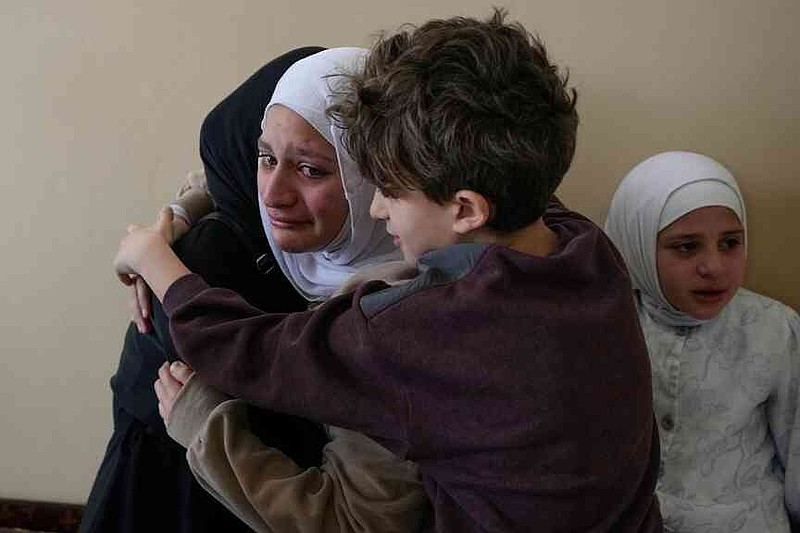
The fighting has killed at least 3,000 people in Iran, more than 2,100 in Lebanon, 23 in Israel and more than a dozen in Gulf Arab states. Thirteen U.S. service members have also been killed.
TRUMP SEES DEAL
“I think they want to make a deal very badly,” President Donald Trump said in interview that aired Wednesday on Fox Business Network’s “Mornings with Maria.”
Trump said China has agreed not to provide weapons to Iran as reports circulated that Beijing has considered transferring arms. In a social media post, Trump seemed to suggest the decision was linked to China being “very happy that I am permanently opening the Strait of Hormuz.”
The president said he thought the war in Iran could be over “very soon” and he expected gas prices to fall to prewar levels by the midterms “on the assumption” that the U.S. is able to stop Iran from obtaining a nuclear weapon. “When that’s settled, gas prices are going to go down tremendously,” he said.
China has long supported Iran’s ballistic missile program and backed it with dual-use industrial components that can be used for missile production, according to the U.S. government.
U.S. Central Command said Wednesday that no ships made it past the blockade in the first 48 hours, while nine merchant vessels complied with direction from U.S. forces to turn around and reenter Iranian waters.
U.S. SENDS REINFORCEMENTS
The forces moving into the region include about 6,000 troops aboard the aircraft carrier USS George H.W. Bush and several warships escorting it, said current and former officials, who like some others spoke on the condition of anonymity to discuss military movements. About 4,200 others with the Boxer Amphibious Ready Group and its embarked Marine Corps task force, the 11th Marine Expeditionary Unit, are expected to arrive near the end of the month.
The infusion of firepower appears likely to coalesce with warships already in the Middle East just as the two-week ceasefire is set to expire Thursday. The personnel will join the estimated 50,000 troops who the Pentagon has said are involved globally in operations to counter Iran.
The arrival of additional American warships will put even greater pressure on Iran and provide Adm. Brad Cooper, head of U.S. Central Command, and other senior military leaders with more options should negotiations with Tehran fail, said James Foggo, a retired Navy admiral and dean at the Center for Maritime Strategy in Northern Virginia.
“The more tools you have got in your kit, the more diversity of options that you have,” Foggo said, calling the injection of additional forces “a reserve capacity, in the event that things go south.”
The arrival of the additional U.S. forces in the Middle East will provide commanders with three aircraft carriers, each with dozens of fighter jets. The USS Abraham Lincoln has been in the Middle East since January, while the USS Gerald R. Ford arrived in the eastern Mediterranean Sea in February, extending a marathon deployment that included time last year in Europe and involvement in operations off Venezuela at the beginning of this year.
Enforcing an extended blockade will be a “tall order” for U.S. forces, but any of those ground operations would be significantly riskier, said Mick Mulroy, a retired Marine and CIA officer who served in the Pentagon during the first Trump administration.
Mulroy said he hopes that the administration and Iran can find an agreement that is acceptable to both sides. If, for example, they can agree to a deal that pauses the Iranian nuclear program for 10 or 20 years, that must be balanced against the challenges Marines and soldiers could face while deployed on Iranian soil.
“It’s not going to be without consequences,” he said of such a mission. “There will likely be casualties.”
Information for this article was contributed by Samy Magdy, Sam Metz, Munir Ahmed, Mike Corder, Darlene Superville, Aamer Madhani, Joshua Boak and Russ Bynum of The Associated Press; and by Dan Lamothe, Susannah George, Tara Copp, Dan Diamond, Karen DeYoung and Alex Horton of The Washington Post.