
How Cybercrime Became a Leading Industry in ‘Scambodia’
PHNOM PENH, Cambodia—A gold-hued skyscraper is rising above the traffic-clogged streets of the capital city on the Mekong River.
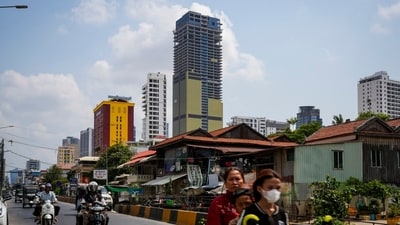
The building is already Cambodia’s tallest structure—and a monument to the spoils generated by transnational cybergangs that have stolen billions of dollars from unsuspecting Americans and others worldwide.
The skyscraper is being built by a company under sanctions by the U.S. Treasury Department for its alleged connection to one of hundreds of scam operations that have cropped up across Cambodia. Scam compounds, some the size of small towns, have housed enslaved workers doing the grunt work of online scams, posing as love interests, investors or police.
Predominantly Chinese syndicates operating in Cambodia have grown so enormous in scale that some foreign politicians refer to the country of 18 million people as “Scambodia.”
The Treasury Department said in September that the company building the Phnom Penh skyscraper was owned by Xu Aimin, a 64-year-old China-born convict and casino mogul, who has shielded himself from law enforcement through his political connections.
Xu is one of a half-dozen alleged kingpins running cybercrime networks, based in Cambodia, who have been sanctioned by the U.S. or are wanted by investigative agencies in other countries. The list also includes two Cambodian senators and a Chinese adviser to successive Cambodian prime ministers.
Legal filings, Cambodian corporate records and sanctions actions in the U.S. and other countries document the infiltration of Cambodia’s ruling class by online scam networks. The Wall Street Journal interviewed more than a dozen men and women who worked in Cambodian scam operations, as well as law-enforcement officials, activists helping enslaved workers and former executives in companies associated with alleged cybercrime enterprises.
Cambodian officials deny complicity with transnational scam syndicates. Corporate records show that Xu resigned as chairman of his sanctioned real-estate-development company, K.B.X. Investment, in November. The company has since changed its name to Amara Koborak Investment. Xu couldn’t be reached for comment. The current chairwoman, Chan Meng Chou, said the company was under new ownership and hasn’t been involved in fraudulent activities.
Under escalating pressure from the U.S., China and other countries, Cambodia’s government in recent months embarked on a nationwide crackdown it said would eradicate online-scam activity by the end of April.
Hundreds of raids and the mass release of workers from scam compounds have exposed the magnitude of an industry that had long existed in the shadows. At the same time, the crackdown has prompted many large operations to scatter, making them harder to track.
A report last year by an expert in Cambodia-based scam networks that was cited by U.S. authorities estimated annual revenue from scam syndicates was as high as $19 billion—equivalent to nearly 40% of the country’s gross domestic product and outstripping its largest formal sector, garment manufacturing.
Americans alone lost $10 billion to online fraud originating from Southeast Asia in 2024, according to U.S. government data. That figure represented a 66% increase from the previous year.
The reputational damage from Cambodia’s growing association with online scams has hurt the country’s formal economy, according to Hun Manet, the prime minister. Ticket sales at its world-famous Khmer monuments are down more than half from before the Covid-19 pandemic.
“People used to know Cambodia for Angkor Wat and saw us as a great nation,” said Chhay Sinarith, a senior minister in Cambodia’s government in charge of combating cybercrimes. “Now, however, some countries associate us with online scams.”
Straight to the top
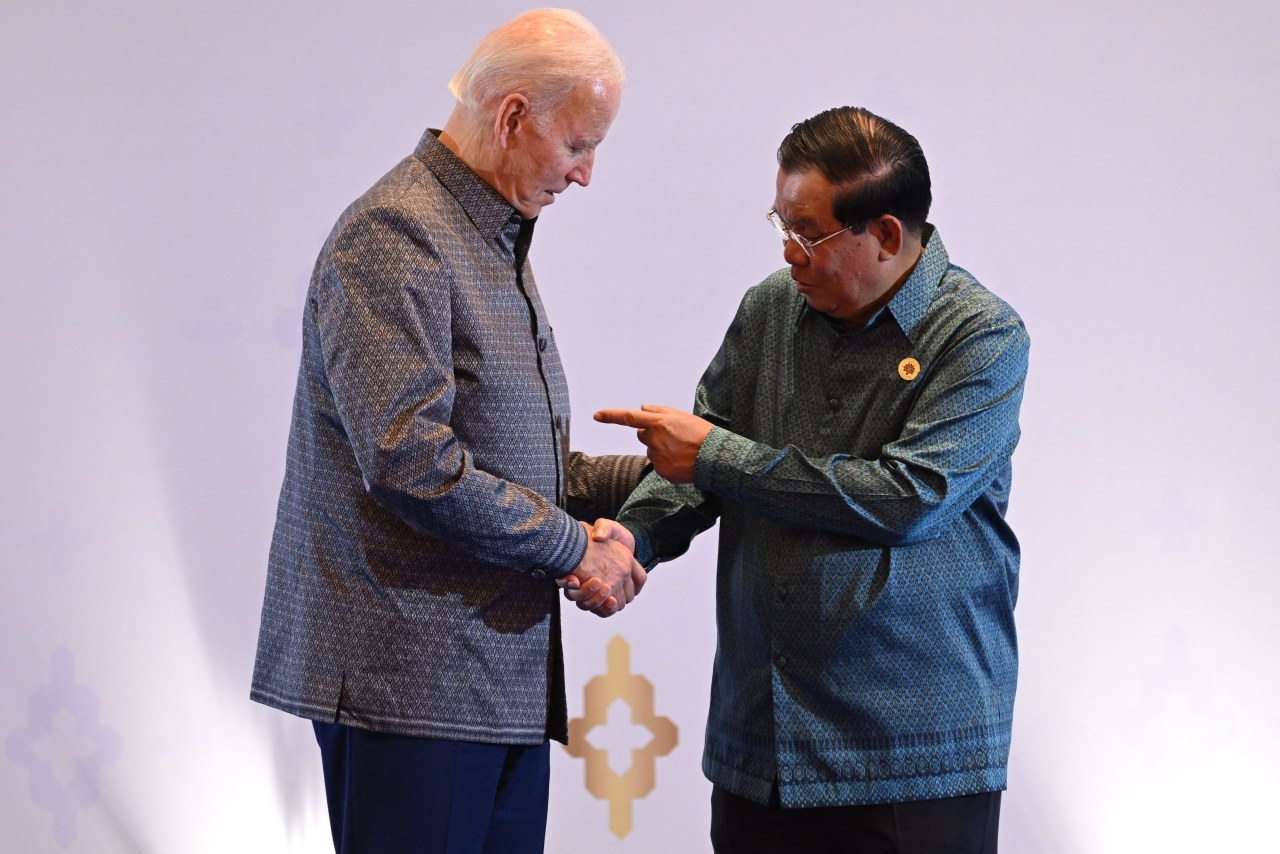
Hun Sen, who had been Cambodia’s prime minister since 1985, hosted former President Joe Biden, China’s premier and Southeast Asian leaders in November 2022. To mark the occasion, Hun Sen, an aficionado of luxury watches, gave each leader a $20,000 limited-edition timepiece—donated by Chen Zhi, whose staggering wealth helped gain him entry into Cambodia’s political elite. A Biden spokesman declined to comment.
Like Xu, the sanctioned developer of the Phnom Penh skyscraper, Chen was an émigré from China and a naturalized Cambodian citizen. Within about a decade of his arrival in 2009, Chen had plowed hundreds of millions of dollars into Cambodian real estate, a bank, an amusement park and supermarkets. Companies that the U.S. Treasury alleges were controlled by Chen and his Prince Group conglomerate ran hotels and casinos in the seaside city of Sihanoukville—and a bespoke watchmaker.
In 2020, Cambodia’s king had bestowed upon Chen the title of neak oknha, similar to a lordship. The same year, the prime minister appointed Chen—who was then 32 years old and spoke only basic Khmer—as an official adviser, a post on the level of a minister.
By the time of the 2022 summit, Cambodia-based activists said in interviews that they had fielded calls from men and women who said they were forced to run scams while confined in casinos, hotels and industrial parks the U.S. alleges were operated by Prince Group.
Despite mounting warnings about Chen and his Prince Group companies, Hun Sen’s son, Hun Manet, retained Chen as an adviser when he succeeded his father as prime minister in 2023.
A spokesman for the Prince Group companies said Chen made his fortune through legitimate investments in real estate and other assets and that neither he nor Prince Group owned or operated buildings in which online-scam operations or other crimes took place.
Cambodia has been fertile ground for cybercrime, analysts say: It has fast internet, the economy runs mostly on the dollar and top government posts often pass within families from one generation to the next.
Activists and family members trying to free scam workers forced to work at Cambodian scam centers say they struggled to get police to intervene, even when they gave exact locations. When police did act, they often freed only the people who had been reported, leaving behind hundreds or thousands of others held in the same compounds.
Scam sprawl
Until recently, the Cambodian government shrugged off international criticism over online scamming and human trafficking, which the U.S. and United Nations say amounts to modern-day slavery.
In 2024, Treasury sanctioned Ly Yong Phat, a Cambodian senator and tycoon, for alleged human-rights abuses of scam workers in a casino resort on the Cambodia-Thailand border owned by one of his companies. Forced laborers from at least five countries reported being beaten, abused with electric shocks and threatened with being sold to other gangs, Treasury said. At least two jumped to their deaths from buildings at the resort.
Cambodia’s foreign ministry denounced the sanctions as politically motivated. Officials praised Ly Yong Phat’s contributions to Cambodia’ s economic development. Ly Yong Phat couldn’t be reached for comment. His company LYP Group, also sanctioned by the U.S., declined to comment.
In September, the Treasury Department announced sanctions against Xu and two other alleged Cambodia-based cyber-scam networks. A month later, the U.S. went after Chen.
On Oct. 14, the Justice Department announced the largest seizure of foreign assets in its history—bitcoin valued at nearly $15 billion at the time. The Justice Department said it was the proceeds from Chen’s illicit activities. He was charged with fraud and money laundering. The U.S. and U.K. also sanctioned Chen and more than 100 companies in and outside Cambodia allegedly associated with his Prince Group conglomerate.

The federal indictment detailed alleged bribes paid by Chen and his associates, including luxury watches worth millions of dollars to a senior government official from an unnamed country. Another unnamed official received a yacht, the indictment said.
The moves against Chen prompted raids, arrests and more asset seizures directed at the Prince network in Thailand, Singapore, Taiwan and Hong Kong. Thai authorities also issued a warrant for Ly Yong Phat, the senator sanctioned by the U.S.
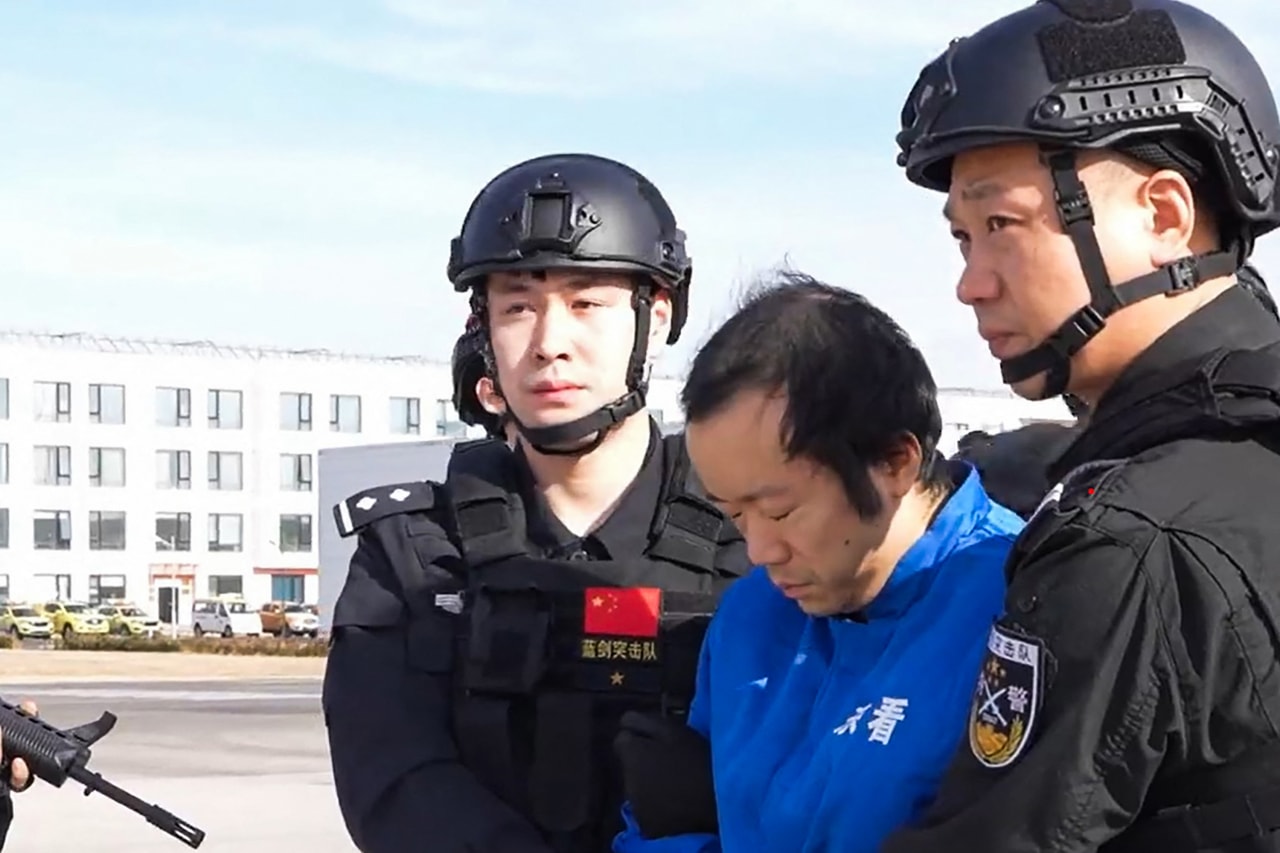
On Jan. 6, a Chinese police SWAT team frogmarched Chen off a jet at a Chinese airport. He wore shackles and a blue prison uniform. Cambodia’s interior ministry said Chen had been detained and extradited at China’s request. Authorities later said they stripped Chen of his Cambodian citizenship.
The Prince Group spokesman said the allegations by the U.S. and other countries against Chen and his companies are false and a pretext for seizing their assets. He said there had been no formal proceedings in Cambodia regarding Chen’s extradition or the efforts to revoke his citizenship.
Hun Manet, Cambodia’s prime minister, told a news agency in February that he didn’t know about the allegations against Chen until the U.S. sanctions and indictment were announced. Chen was “just a businessman, contributing to the economy,” Hun Manet said.
Within days of Chen’s arrest, the gates were open at compounds the U.S. said were run by Prince Group. The worker exodus spread beyond Chen’s alleged network a week later, when Cambodian authorities announced the arrest of another alleged scam-compound owner, Ly Kuong.
The freed workers flooded city streets in Sihanoukville and Phnom Penh. Thousands lined up at the Chinese and Indonesian embassies for help with repatriation. Golden Fortune, the Chrey Thom scam compound that U.S. authorities said was built and operated by Prince, was raided by police and soon other properties in town emptied out.
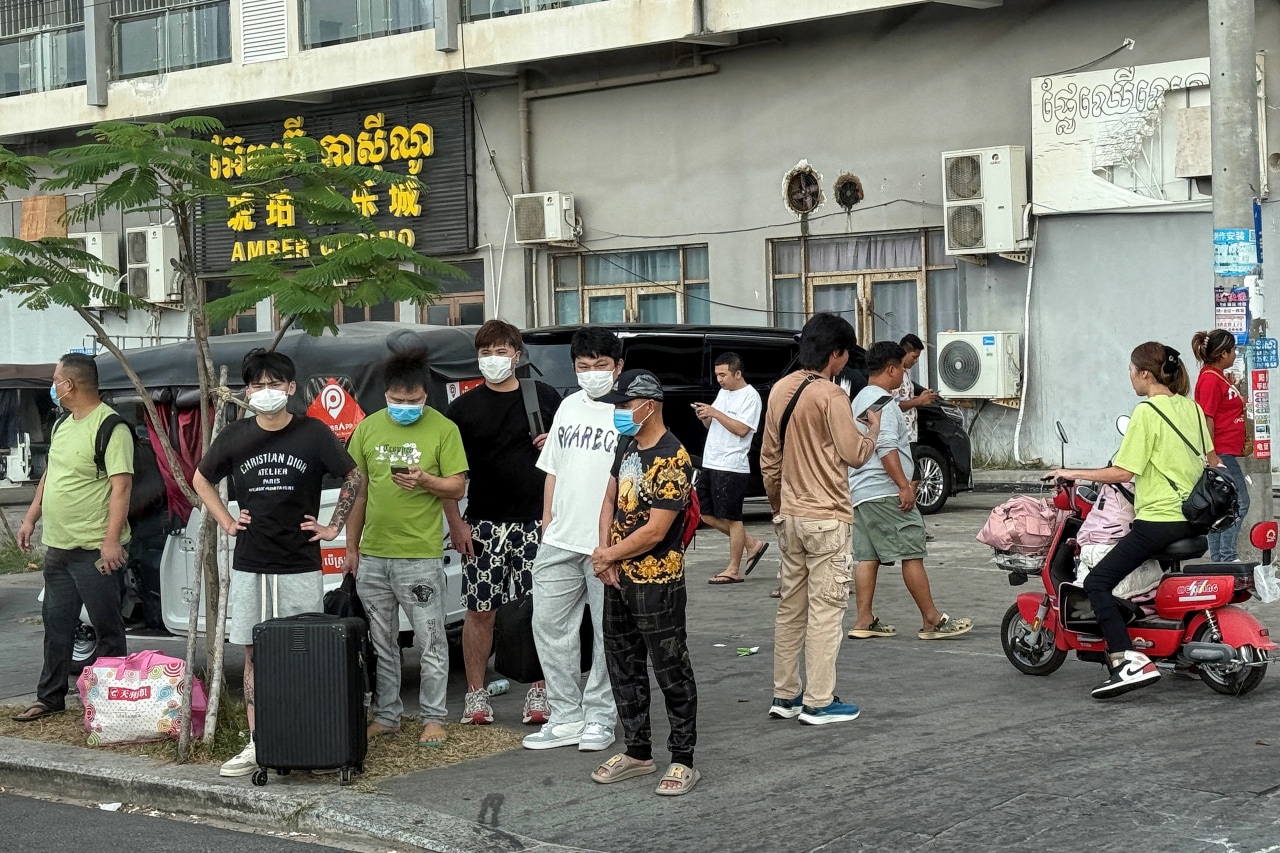
Construction workers said they paused work on half-finished compounds. A hotel receptionist said rooms that were overbooked just a few weeks ago now stood empty.
Backstage
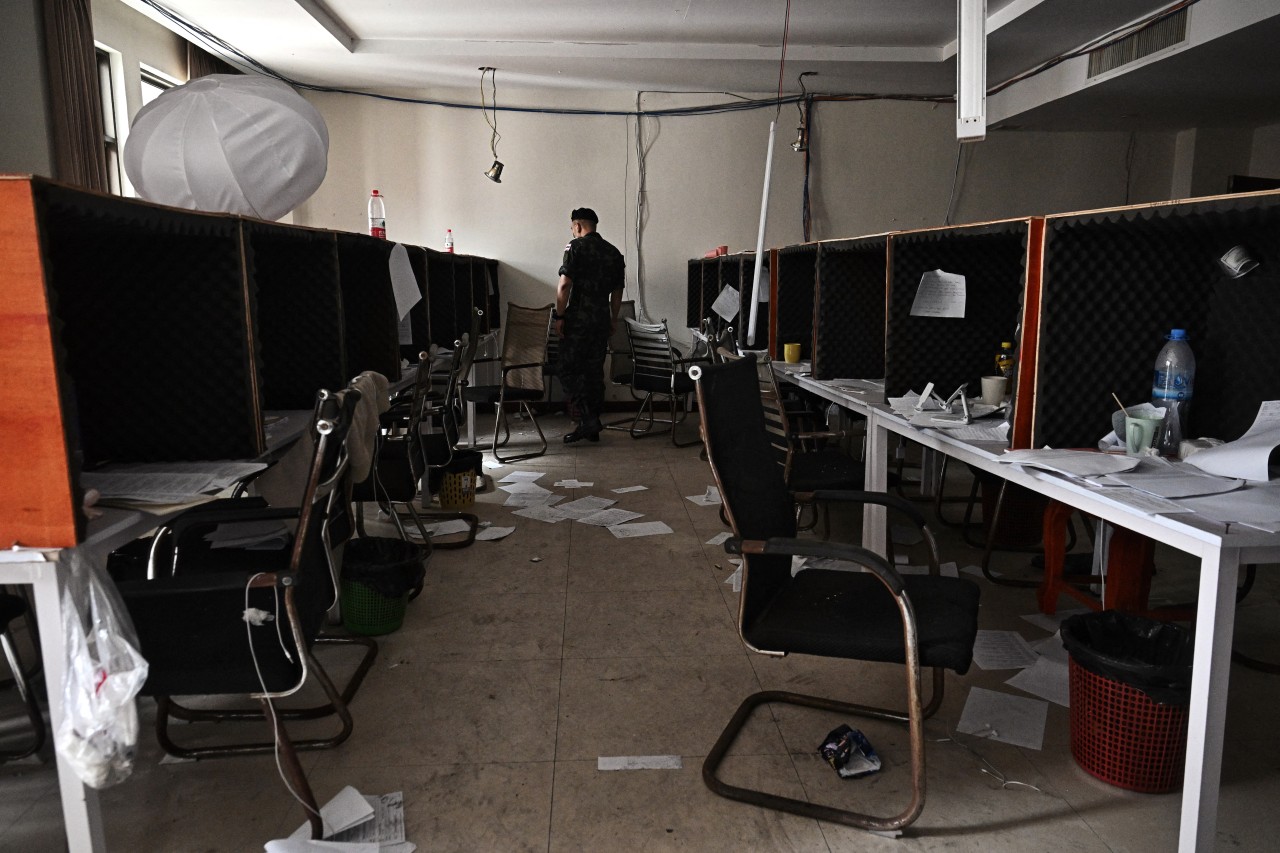
At a hastily emptied compound 60 miles southwest of Chrey Thom, abandoned suitcases and clothes littered the corridors. In open-plan offices filled with rows of computers, detailed notes on potential victims remained scattered on desks.
“The customer was just providing details when her husband came forward and grabbed the mobile phone started argument and cut the call,” a worker had scrawled in looped letters on a preprinted form. It was one of hundreds of documents a Journal reporter found in a vast compound vacated in the crackdown.
Other papers showed personal information shared with scam workers: ID numbers, home addresses; names, ages and professions of spouses, children and grandchildren; bank and retirement accounts along with balances. Some forms noted the time a spouse or child left for work each day and when they returned home.
There were detailed scripts for a new scam proliferating in India: Victims are told they are under “virtual arrest” and pressured to transfer their savings to prove the money wasn’t the proceeds of a crime. The scam was conducted in life-size replicas of police offices from several countries. Abandoned props included fake uniforms and wigs.
Cambodian officials said between 6,000 and 7,000 mostly foreign workers lived and worked in the compound, known as Baima Park, made up of 31 buildings in an area the size of 36 football fields. News about forced labor and abuse at Baima Park scam operations surfaced in 2022, after a Chinese man typed a message into a Facebook livestream by then-Prime Minister Hun Sen, saying he was punished with beatings and electric shocks if he didn’t work.
Scam operations at the compound continued until the arrest of its alleged owner, Ly Kuong, was announced on Jan. 15. Videos from that night show workers fleeing seven-story buildings with barred windows. Most slept 12 to a room. Managers enjoyed private quarters with king-size beds and private bathrooms. One left behind toys and a toddler’s shoes.
The compound had grocery stores, hairdressers and massage parlors that appeared to have doubled as brothels. Dozens of restaurants served Chinese, Pakistani, Thai and Indian cuisines.
Ly Kuong couldn’t be reached for comment. The company that has held the license for a casino attached to Baima Park didn’t respond to requests for comment.
Chhay Sinarith, the senior minister, has said authorities have raided more than 250 scam centers and launched legal cases against some 750 alleged ringleaders. Around 48,000 foreign workers have been deported and more than 200,000 have left the country, according to the information ministry.
“The goal of the cleanup is to crack down and completely eliminate” online scam activity, Chhay Sinarith said.
Yet other than Chen, none of the alleged kingpins sanctioned by the U.S., including skyscraper developer Xu Aimin, have been publicly charged or arrested. Neither has Kok An, the senator, and the owner of the Crown Casino in Chrey Thom, who is wanted in Thailand. Kok An didn’t respond to requests for comment.
Chhay Sinarith said authorities were “monitoring activities” and waiting for countries to show evidence of their alleged crimes.
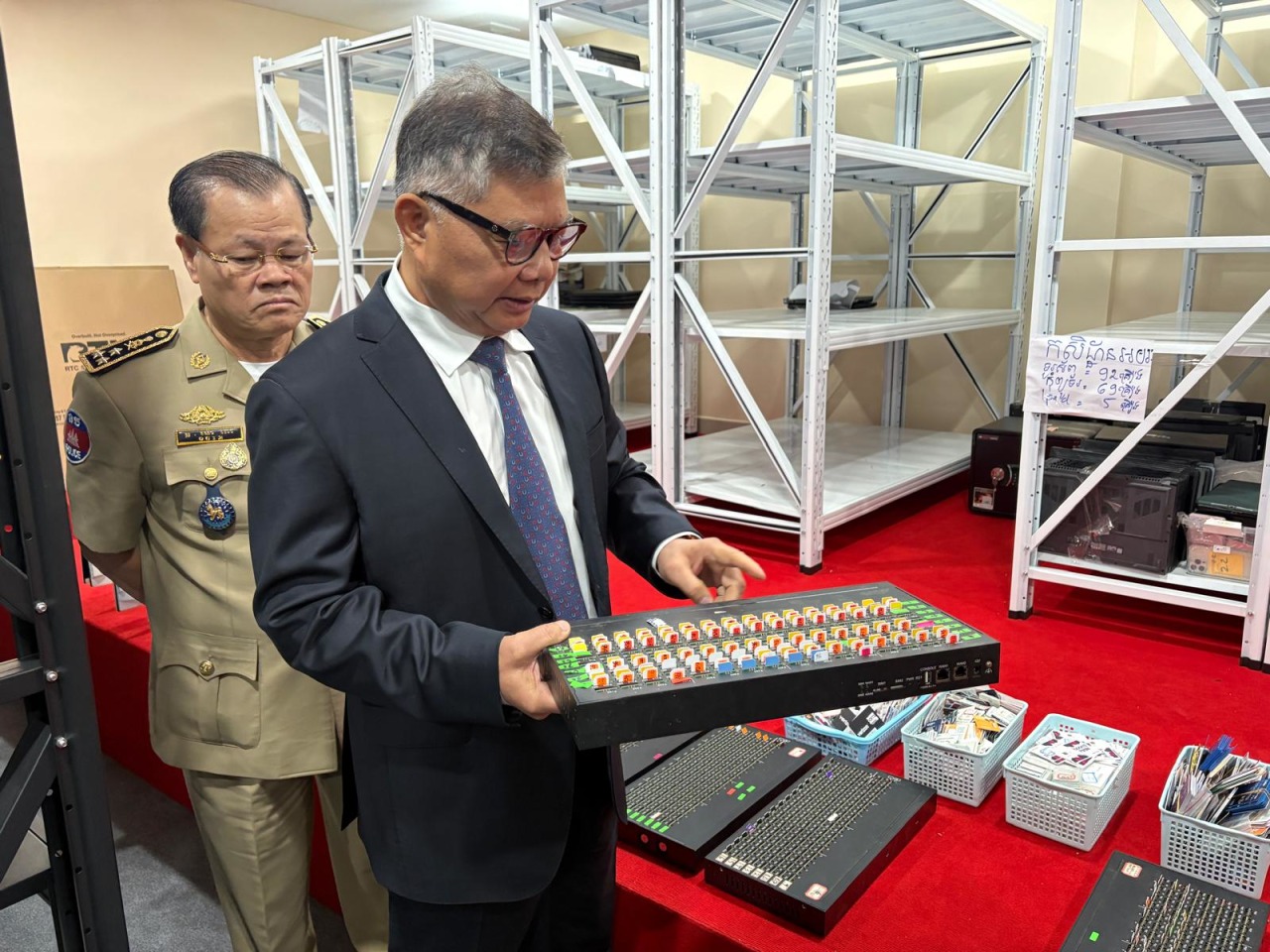
Former scam workers say some operations have moved from large compounds to offices in city high-rises.
On Telegram groups, thousands of ads for apparent scam jobs have been posted since the start of the crackdown. One post looked for Filipino men for a “ponzi” project in Poipet, a city on Cambodia’s border with Thailand.
Another ad asked for fluent English speakers to call Americans and noted that employees had to stay on the company’s premises.
Write to Gabriele Steinhauser at [email protected] and Patricia Kowsmann at [email protected]
