
Afro Babies’ gravity-defying styles are inspiring African women to embrace their natural hair
You may not know her name, but the striking work of self-taught hair artist Elisabeth Anayes Niouky is certainly turning heads.
Niouky, based in the West African country of Senegal, crafts modern African hairstyles for editorial photo shoots, fashion shows and celebrity appearances. She has worked with magazines including Dazed, and Afrique Noire, and produced eye-catching styles for celebrities such as Malian music legend Oumou Sangaré.
Thanks to Niouky, Senegalese beauty queen Camilla Diagne walked onto the stage at the Miss Universe pageant in Thailand last year wearing her hair towering high above her head in a lion’s mane-inspired afro sculpture — a departure from the straight wigs or extensions often chosen by Senegal’s past contestants.
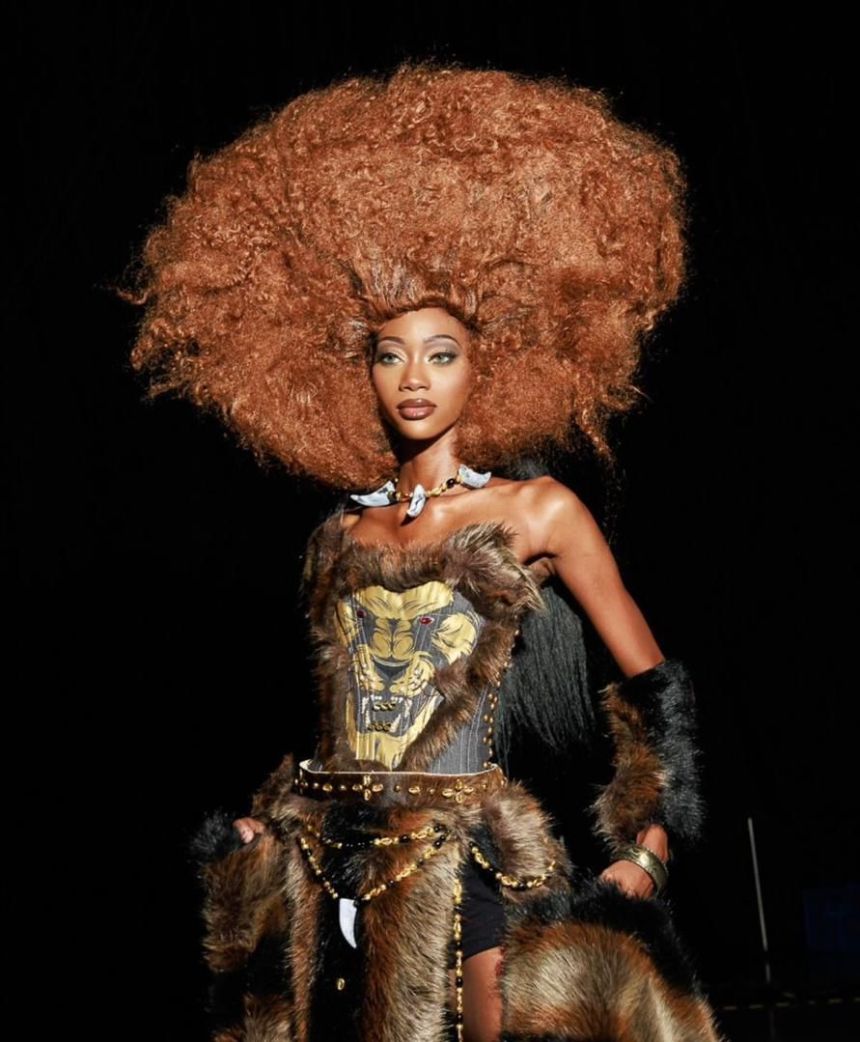
Niouky’s TikTok videos, showing her styling process for both extraordinary hair sculptures and more wearable braids or afro styles, receive hundreds of thousands of views and comments, and through her work, Niouky leads a growing movement, inspiring women to embrace their natural hair texture in a country where it’s not always celebrated.
She says that in West Africa, long, flowing, smooth hair is the current “beauty standard,” with wigs, weaves and chemical straightener all popular.
It is a common perception among Senegalese women that their natural coily hair is “unprofessional” or “unfashionable,” Niouky told CNN.
“Salons here will ask you to use product to change your hair texture (and) make you feel bad for having natural hair,” she said.
In 2025, Niouky formally founded the Afro Babies Movement, her online following of women embracing African-rooted hairstyles. A year earlier, Afro Babies started out as a collective of friends — stylists, photographers and models — showcasing natural hair and posting their photoshoots on social media. But it grew into something bigger.
“Every day, we received messages from girls who wanted to join, to be part of this space, to be seen. And that’s what confirmed for me that this needed to grow beyond us,” she said.
Reconnecting to roots
Through representation of African hair and styles as modern and fashionable, Niouky says she is “encouraging (women) to really come back to reconnect with their natural hair and their natural beauty.” Even when she uses extensions, she ensures they are textured or braided in ways that honor the “rich history of ancestral hairstyles.”

According to Kandace Chimbiri, British Barbadian author of “The Story of Afro Hair: 5,000 Years of History, Fashion and Styles,” braids, twists and dreadlocks can be traced back to ancient Egypt.
To many, the afro hairstyle as a symbol of resistance is synonymous with the Black Power movement of the 1960s, but Chimbiri offers a reminder that what we now call afros is simply wearing Black hair naturally, a style that’s been worn “since the first people with this hair type appeared on Earth.”
American journalist Lori L. Tharps, the co-author of “Hair Story: Untangling the Roots of Black Hair in America,” said in pre-colonial African communities, hairstyling was “important to signify your status, your role in the community.” Hair could communicate if you were mourning, married or going to war.
This changed with the arrival of colonialism, Tharps said, explaining that while hair’s significance remained, its language was corrupted by White supremacy. Black hair became something to be tamed to avoid discrimination.
“We are all needing to get back in touch with pre‑European‑contact African relationship with the hair,” Tharps said, “where it is revered, where it is lovingly cared for.”
‘It feels natural’
Growing up in Thiès, Senegal, Niouky said she would quietly observe her mother — a braider who styled clients’ hair at home — while practicing on dolls. Niouky later began braiding hair to fund her master’s degree in supply-chain management, but eventually, styling hair transformed into an art, something she felt called to do.
“Even when I’m sleeping, my mind is still working and visualizing,” Niouky explained. “When I begin to bring it to life, it feels natural.”

Niouky uses wire, glue, thread, and even metal mesh from the hardware store to achieve her boldest looks. Being self-taught means she has no set method — she might use a plastic bottle inside a client’s hairdo to support a towering, sculped afro, or hide a wire inside braided hair extensions to hold the shape of a detachable hairpiece.
Natural hair in West Africa
In the US, the natural hair movement was pioneered by American civil rights leaders such as Angela Davis who wore her hair natural as a form of resistance and Black pride. The early 2000s and the introduction of social media saw exponential growth in natural hair pride and access to information via online communities, empowering Black women to stop straightening their curls.
In 2019, the CROWN Act, which stands for Creating a Respectful and Open World for Natural Hair, was passed in California and later adopted in other states, prohibiting racial discrimination based on hair texture and protective hairstyles in schools and workplaces.

But in Africa, the chemical straightener, or “hair relaxer,” industry is still thriving. According to the most recent figures from market insight agency Mordor Intelligence, Africa and the Middle East accounted for the largest market share of hair relaxers in 2022, expected to be worth $928 million by 2030.
“Despite the growing visibility of the natural hair movement, the hair relaxer market across Africa remains structurally resilient,” a Mordor Intelligence analyst told CNN.
Growth of the African hair relaxer market is slowing gradually, according to the analyst, but usage levels remain “significantly more stable compared to North America,” which has seen a pronounced decline.
Tharps attributes Senegal’s delayed adoption of the natural hair movement to the prolonged effects of colonialism — the country gained independence from France in 1960.
“When you consider it took almost 150 years for the (natural hair) movement to take hold in the USA,” Tharp said, “it would follow that it would take a similar amount of time for African people en masse to rewrite the narrative of their hair.”

Tharps says globally exported images of Black women considered beautiful still often have straightened hair — “Beyoncé, Oprah, Zendaya, Rihanna, Princess Megan Markle, just to name a few,” she said.
She added that deeply entrenched markets for wigs, extensions and chemical treatments make those options more accessible, while knowledge of natural hair styling remains limited.
Niouky herself had chemically straightened hair, but upon pursuing hair art decided to do a “big chop” and grow it out naturally. She meets many clients hoping to recover their hair after years of using chemicals. “Products are damaging a lot of women’s hair here in Senegal,” she said.
Beyond damaging hair, studies show chemicals in hair relaxers are linked to an increased risk of developing breast cancer, which is more than six times higher for Black women. A 2022 study found regular use of hair relaxers increased risk of uterine cancer.
Momentum in Senegal
Afro Babies Movement was formalized by hosting an inaugural hair styling event in Dakar in October 2025, for breast cancer awareness. Partnering with clinics and medical professionals, women learned about prevention and early detection, and were guided through how to perform self-examinations. Attendees also received free natural hairstyles adorned in pink accessories. Niouky hopes to bring her community offline with more in-person events.

In Senegal, people are taking notice of her work. The Afro Babies Movement was nominated as a Top Female-Led Business — and Niouky highlighted among the Top 20 Inspiring Women of Senegal — by the 2025 Only Woman Awards, recognizing African female excellence.
Clothing boutique Meya Boutique historically used models wearing wigs but has hired Niouky to style its models, and she was invited to last year’s Forum Invest in Senegal, a conference aimed at foreign investment, to represent Senegalese future creative innovation.
Niouky says that when Diagne wore her hair in an African-rooted style on the Miss Universe stage, it signaled a shift in what hair type is considered beautiful in the country. The unapologetic shape of Diagne’s lion-inspired afro in many ways mirrors the Afro Babies Movement itself: rooted in history but rising toward something new.
