
BJP leaders slash convoys, skip flights, take Metro after PM Modi’s ‘economic patriotism’ call
Prime Minister Narendra Modi and several BJP Chief Ministers significantly cut down the size of their official convoys.
 –>
–>
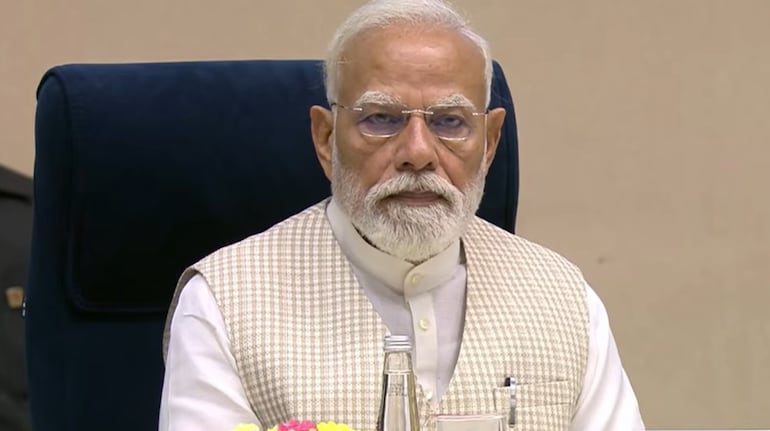
Prime Minister Narendra Modi.

- PM Modi urges citizens to cut fuel use amid West Asia tensions
- BJP leaders reduce convoy sizes and cancel non-essential travel
- States adopt austerity measures, promote public transport and WFH

Soon after the Assembly elections in the four states and the Union Territory of Puducherry concluded, Prime Minister Narendra Modi called for ‘economic patriotism’, urging citizens to reduce fuel consumption and embrace Covid-era restraint amid the pressures stemming from the West Asia conflict.
While PM Modi reiterated the appeal to citizens for a second time while addressing a gathering in Gujarat, the Opposition leaders came down heavily on BJP ministers for holding massive roadshows and travelling in large convoys.
Amid the criticism, several BJP leaders — with Prime Minister Narendra Modi at the forefront — acted swiftly to back their words with action.
Prime Minister Narendra Modi and several BJP Chief Ministers significantly cut down the size of their official convoys, while Maharashtra advised ministers to avoid non-essential air travel and opt for virtual meetings wherever possible.
On Wednesday, ministers Kapil Mishra and Ramdas Athawale were seen commuting by metro, while Maharashtra Minister Ashish Shelar cancelled his planned visit to the Cannes Film Festival as part of the broader push toward energy-efficient governance.
Why the shift in attitude?
The prolonged closure of the Strait of Hormuz — the global energy corridor — has affected oil and LPG supplies to India. India imports over 85% of its crude requirements, making it the second-largest oil importer. Several countries like China, Pakistan and Bangladesh had already announced fuel rationing and work-from-home measures.
Although a fragile ceasefire was announced in April, tensions remain high with the Iran and the US accusing each other of violating the truce. In recent days, Iranian forces have reportedly targeted US naval vessels and commercial shipping in and around the strait, while the US Navy has continued patrol and escort operations to secure maritime traffic.
Iran has also sought to assert greater control over the waterway, with Revolutionary Guard officials expanding what they describe as Iran’s “operational zone” in Hormuz—raising fresh concerns over global energy security and the possibility of a wider regional escalation if diplomacy collapses.
What was PM Modi’s appeal?
On May 11, while addressing a gathering in Hyderabad, PM Modi called for “collective sacrifice”, urging citizens to shift to public transport and revive work-from-home practices to conserve fuel.
To preserve foreign exchange reserves, he urged citizens to delay gold purchases for a year and avoid foreign holidays and destination weddings. Reduction in edible oil use and cutting down on imported fertilisers also featured in PM Modi’s speech.
How states acted on PM Modi’s appeal?
Soon after PM Modi’s appeal, the Opposition pulled him as well as several BJP leaders. PM Modi drew flak for his massive roadshows and extravagant political activities in Gujarat and Assam. Madhya Pradesh BJP leader Saubhagya Singh Thakur’s massive 200-vehicle convoy quickly went viral on social media, sparking further outrage.
Quick to act on the criticism, several BJP-ruled states announced austerity measures. As per reports, PM Modi has ordered a 50% reduction in the size of his convoy and urged the use of electrical. Union Home Minister Amit Shah was also seen travelling with just five cars in his convoy – down from the 10-11 vehicles that usually accompany him.
In Maharashtra that is led by a BJP government, ministers will now not be able to board a government aircraft, except for urgent business, and that too will require prior clearance from Chief Minister Devendra Fadnavis.
Foreign tours of some ministers have also been called off. Cultural Affairs Minister Ashish Shelar cancelled his travel to France for the Cannes Film Festival, while a study tour to Japan by 22 MLAs is also likely to be called off, reported India Today citing a report from the Hindustan Times.
Delhi Chief Minister Rekha Gupta announced that officers of the Delhi government and all ministers would use “a minimum number of vehicles” and prioritise carpooling and public transport. She also urged Delhi residents to make greater use of buses and Metro services instead of private vehicles.
Uttar Pradesh CM Yogi Adityanath directed a 50% reduction in the size of the convoys of ministers and other officials. He also urged offices to prioritise WFH.
The Gujarat government also took a broad set of measures as part of the austerity drive. On Wednesday, Chief Minister Bhupendra Patel travelled to Amreli with a convoy of just three vehicles. The health minister and labour minister have decided to forego their escort vehicles.
Meanwhile, Gujarat Governor has decided not to use helicopters for events within the state and to rely on trains, buses and public transport for intra-state travel. The Governor has also instructed vice-chancellors of universities across Gujarat to observe one day every week as “Chemical Engine Free Day”, encouraging students and faculty to prioritise bicycles and EVs.
On the other hand, Gujarat Deputy Chief Minister Harsh Sanghvi cancelled his trip to the US, where he was to attend a convention organised by the Federation of Gujarati Associations of the US.
The number of vehicles in Madhya Pradesh Chief Minister Mohan Yadav’s convoy has been reduced from 13 to eight, while the government has directed ministers and newly appointed office-bearers of corporations and boards to avoid vehicle rallies.
