
Mizoram: New Rajdhani brings tourism surge, unpacks fear of the outsider
The railway line connecting Sairang, a small town near Aizawl, to New Delhi has brought a surge in domestic tourism and, along with it, an unfamiliar anxiety among locals — about strained infrastructure, environmental damage and treasured traditions being reduced to 60-second video shorts.
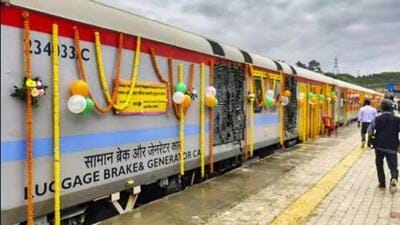
As locals deal with an unprecedented tourist surge, much of it with enthusiasm, stakeholders have flagged concerns about the packed, once-a-week Rajdhani Express landing in Sairang, unpacking tourists who have little knowledge of local customs and, what stakeholders believe to be, an obsession with making social media reels.
The beginning and the promise
Prime Minister Narendra Modi inaugurated the state’s first railway line — the Bairabi–Sairang route — from Lengpui Airport last September, flagging off the new Rajdhani Express. It connects Sairang to New Delhi’s Anand Vihar railway station, passing over 15 stations and taking nearly two days.
“This new railway line will create opportunities in medical services, education, trade, tourism, and industry, and thereby strengthen regional prosperity by integrating Mizoram more closely with the rest of India,” Modi said during the inauguration.
Tourism has indeed taken off. According to the state tourism department, 8.01 lakh tourists visited Mizoram during the past six months, the peak season being December and January, which coincided with Christmas and New Year’s celebrations. “1.33 lakh tourists were registered in Dec 2025 and 1.21 lakh in Jan 2026,” a statistic issued by the state tourism department said.
Rosy Hmar, a statistician at Mizoram tourism department, said during 2024-2025 there were a total of 5.12 lakh tourists visiting Mizoram.
“According to our data, there has been a significant rise in the number of tourists visiting Mizoram after the inauguration of the railway line. To date, we have already passed the previous year with a growth rate record of over 86 percent,” she said.
The tourism department records stated that there has been a substantial increase in domestic tourists; this year’s domestic tourist footfall has already surpassed the 2024-2025 by over 4 lakh.
Among foreigners visiting the state in April 2025 and January 2026, 8,598 were from neighbouring Myanmar, 662 from the US, 254 from Japan, 197 from the UK, and 158 from Israel.
As it turns out, homestays have been frequently over-booked in the state capital and around Mizoram, café chefs are working overtime, service industry workers are straining to understand new languages and taxi services are in much demand. All this was unimaginable until just a few months ago, tourist operators say.
Also Read:Rail link helping Mizoram emerge as fastest-growing tourist destination in NE: Guv
The fear
But beneath the boom a sense of alarm is ringing. Unease is growing among local NGOs, students’ unions, and the Church over the unexpected influx of tourists and its impact.
The state’s most influential student body, the Mizo Zirlai Pawl (MZP), has warned the state government and stakeholders that a sudden surge in tourism, or “over tourism,” in a small state like Mizoram could trigger negative impacts including on residents’ daily lives.
The student body has issued travel guidelines for tourists to maintain decorum and respect the traditional sanctity of Mizoram’s various tribes. The guidelines warned video vloggers and content creators not to make content solely to amass followers on social media.
“What the MZP fears most is cultural erosion or commodification of our local culture by vloggers; we are apprehensive that they could unintentionally erode local traditions and heritage to mere stage performances, causing loss of our original culture and identity,” Hmingsanga Chhangte, general secretary of the MZP, said.
Meanwhile, the state’s largest NGO, the Central Young Mizo Association (CYMA), has taken up the issue with the state’s tourism minister Lalnghinglova Hmar. The discussion focussed on creating a meaningful and safe tourism environment for both the tourists and the local settlers of Mizoram, who are considered minorities by visiting tourists.
Also Read:Mizoram train underscores frontier to front-runner vision
The route ahead
“We need to find a way to balance the tourism industry so that we can have economic gain without compromising our culture and identity,” R. Lalngheta, CYMA president, said. “The question is, are we ready or prepared for this kind of rapid exposure?” he said.
James Lalrina, a local tour operator, talked about the sudden rise in tourist footfalls after Sairang was connected by the railway line. “The very fact that the train that arrives at Sairang is always at its full capacity, it is evident that the footfall of tourists in Mizoram has surged manyfold,” he said.
The Mizoram Presbyterian Church, considered central to Mizo religious and social life, has reached out to its network to make sense of the situation on the ground. “I have consulted with church leaders as to how we can use our unique Christmas celebrations. Church leaders see both opportunity and risk: a chance to share faith and culture, but also the danger of turning sacred traditions into spectacle,” Tourism minister Lalnghinglova Hmar said, adding:
“As of now, the plan is to make Aizawl the Christmas Capital of India”.
The MZP also fears possible risks to the socio-economic and cultural integrity of minorities and the illegal entry of immigrants, not to talk of tourists.
“We have made several inspections of the railway station at Sairang…We detect unprecedented illegal entries and uncontrolled environmental pollution in and around the station,” said Hmingsanga Chhangte, general secretary of the MZP.
